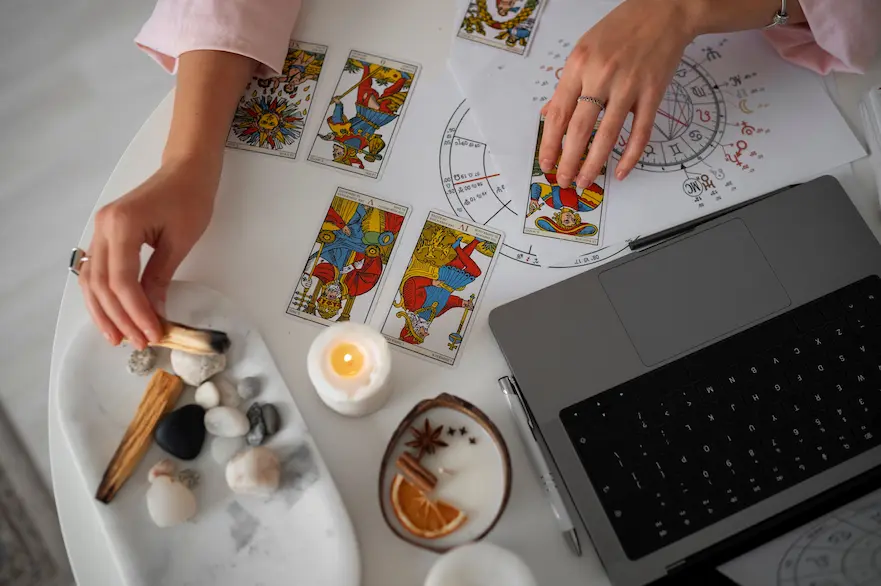
Tarot can be a powerful tool for shadow work, helping you heal emotional wounds, confront limiting beliefs, and embrace your hidden self
1. What Is Shadow Work and Why Tarot Is the Perfect Mirror
Unlocking the Shadows – Shadow work is the process of exploring the unconscious parts of ourselves, the fears, desires, and beliefs we’ve buried deep within. Coined by Carl Jung, the “shadow” represents the aspects of our personality we reject or suppress, often because they’re deemed unacceptable by society or painful to confront.
Tarot, with its rich symbolism and archetypal imagery, acts as a bridge to the subconscious. Each card becomes a portal to self-reflection, allowing us to uncover hidden truths and emotional wounds. Unlike traditional therapy, tarot offers a spiritual and intuitive lens one that speaks in metaphor, emotion, and energy.
Why tarot works for shadow work:
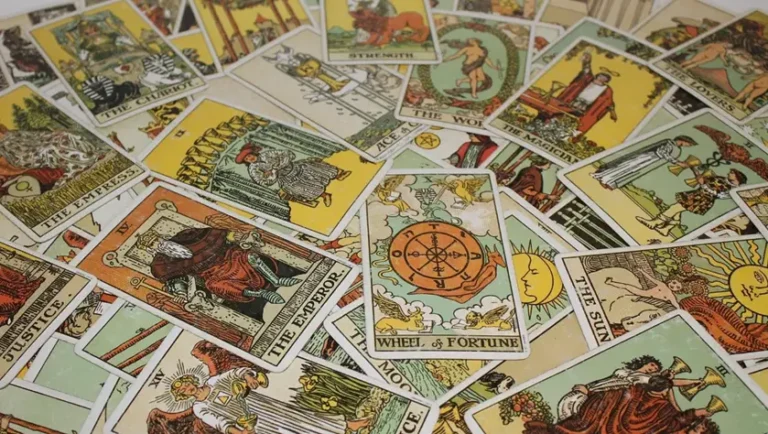
- Symbolic storytelling: Cards like The Moon, The Devil, and The Tower reflect inner fears, illusions, and upheaval.
- Access to the subconscious: Tarot bypasses logic and taps into intuition, revealing what’s beneath the surface.
- Journaling prompts: A single card can inspire pages of introspection, helping you decode your emotional landscape.
For example, pulling The Devil might reveal attachments to toxic patterns or self-sabotage. Instead of fearing the card, you’re invited to ask: “What am I clinging to that no longer serves me?” This reframing turns discomfort into insight.
2. Healing Trauma Through Tarot: A Gentle Yet Powerful Approach
Trauma often leaves emotional imprints that shape our beliefs, behaviors, and relationships. Tarot offers a non-invasive way to explore these wounds, especially when traditional methods feel overwhelming.
How tarot supports trauma healing:
- Validation of emotions: Seeing your pain reflected in a card like Three of Swords can be deeply affirming.
- Safe exploration: Tarot allows you to approach trauma symbolically, reducing emotional overwhelm.
- Empowerment: Cards like Strength and The Star remind you of your resilience and capacity to heal.
A healing spread might include:
- Root of the wound – What past experience shaped this pain?
- Current impact – How is it affecting your life today?
- Path to healing – What energy or action can support your recovery?
This process isn’t about reliving trauma—it’s about reclaiming your narrative. Tarot helps you shift from victimhood to agency, offering clarity and compassion along the way.
3. Confronting Limiting Beliefs: Rewriting the Inner Script
Limiting beliefs are the silent saboteurs of our lives. “I’m not good enough.” “I’ll never be loved.” “Success isn’t for people like me.” These thoughts often stem from childhood conditioning, societal expectations, or unresolved pain.
Tarot helps you identify and challenge these beliefs by externalizing them. When you pull a card like Eight of Swords, it may reflect mental entrapment—beliefs that keep you stuck. But the image also shows that the ropes are loose, the blindfold removable. You’re not as trapped as you think.
Tarot techniques for belief work:
- Belief mapping: Use cards to explore the origin, impact, and antidote to a limiting belief.
- Dialogue with the cards: Ask, “What belief is holding me back?” and let the imagery speak.
- Reframing spreads: Replace disempowering thoughts with empowering ones using cards like The Magician or The Sun.
Over time, tarot becomes a tool for cognitive and emotional rewiring. You stop seeing yourself through the lens of fear and start embracing your potential.
Tarot as a Sacred Tool for Inner Alchemy
Shadow work isn’t easy it requires courage, honesty, and a willingness to face discomfort. But tarot makes the journey more intuitive, creative, and spiritually rich. It doesn’t just expose the shadow; it helps you integrate it, transforming pain into wisdom.
Whether you’re healing trauma, challenging beliefs, or simply seeking deeper self-awareness, tarot offers a sacred space for reflection and renewal. It’s not about fortune-telling, it’s about soul-telling.
So, the next time you shuffle your deck, ask not “What will happen?” but “What truth am I ready to see?”
FAQ – Frequently Asked Questions
What is shadow work, and how does tarot support it?
Shadow work is the process of exploring the unconscious parts of ourselves, fears, desires, and beliefs we’ve suppressed or rejected. Tarot supports this by acting as a symbolic mirror, revealing hidden emotions and patterns through archetypal imagery. Cards like The Moon or The Devil help us confront what lies beneath the surface, offering intuitive insights that traditional methods may overlook.
Can tarot really help heal emotional trauma?
Yes, tarot can be a gentle yet powerful tool for trauma healing. It allows individuals to explore painful experiences symbolically, reducing emotional overwhelm. Cards such as Three of Swords validate grief, while The Star and Strength offer hope and resilience. Tarot doesn’t replace therapy but complements it by fostering self-awareness and emotional clarity.
How do I use tarot to identify and challenge limiting beliefs?
Start by asking your deck questions like “What belief is holding me back?” or “Where did this belief originate?” Cards like Eight of Swords often reflect mental entrapment, while The Magician or The Sun can guide you toward empowerment. Journaling alongside your readings helps reframe these beliefs and rewrite your inner narrative.
Is shadow work with tarot safe for beginners?
Absolutely, but it’s important to approach it with mindfulness. Begin with simple spreads and focus on one theme at a time. Use grounding practices like meditation or breathwork before and after readings. If a card evokes strong emotions, pause and reflect. Shadow work is a journey, not a race, and tarot offers a safe, intuitive entry point.
What are the best tarot cards for shadow work?
Some of the most revealing cards for shadow work include:
The Moon – illusions, subconscious fears
The Devil – attachments, self-sabotage
The Tower – upheaval, transformation
Death – endings, rebirth
The Hermit – introspection, inner guidance
These cards invite deep reflection and are ideal for uncovering hidden truths and initiating healing.
Stay updated with the latest news on Rapido Updates. Keep yourself updated with The World, India News, Entertainment, Market, Automobile, Gadgets, Sports, and many more
Can Tarot Cards Really Tell Your Future? Understanding the Truth Behind Tarot Reading
Corporate Employees Are Turning to Tarot for Stress Relief, Here’s Why
About the Author


4 thoughts on “Unlocking the Shadows: How Tarot Transforms Trauma, Beliefs & the Hidden Self”