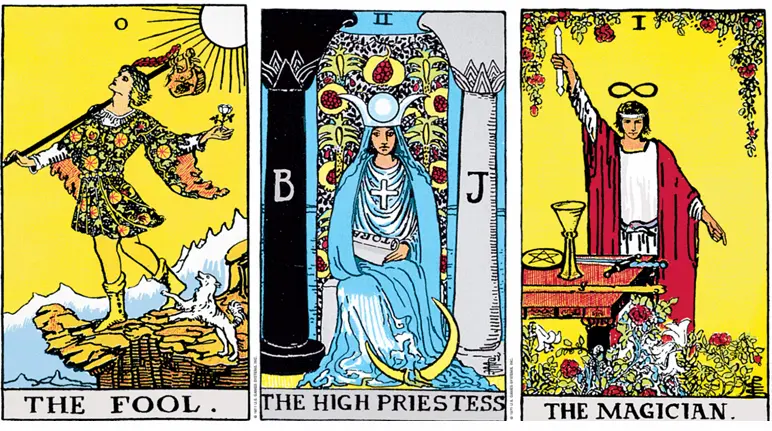
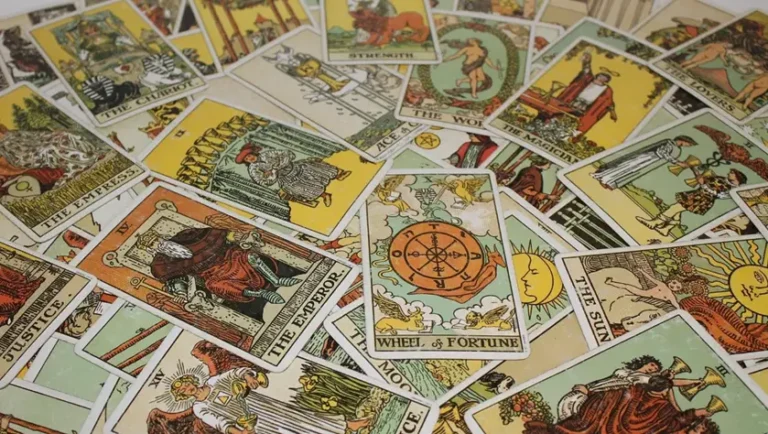
Tarot follows a structured system of 78 cards with specific archetypes and suits.
Tarot Myth Debunked – Tarot cards have long been cloaked in mystery, misunderstood by sceptics, and sensationalized by pop culture. For some, the word “tarot” conjures images of crystal balls, shadowy fortune-tellers, and ominous predictions. Others associate it with occult practices or even fear it as something “evil.” But the truth is far more nuanced and far more empowering.
In this blog, we’ll peel back the layers of myth and misconception surrounding tarot, explore its true purpose, and show how it can be a powerful tool for reflection, insight, and personal growth.
Tarot Myth #1: Tarot Is Fortune-Telling
The Misconception:
Many believe tarot is all about predicting the future, telling you when you’ll meet your soulmate, how much money you’ll make, or whether you’ll get that dream job.
The Reality:
Tarot isn’t a crystal ball. It’s a mirror.
Rather than offering fixed answers or absolute predictions, tarot provides symbolic imagery and archetypes that help you reflect on your current situation, mindset, and potential paths forward. It’s less about “what will happen” and more about “what’s happening now” and “what could happen depending on your choices.”
Think of tarot as a conversation with your subconscious. The cards don’t dictate your future, they illuminate it.
Tarot Myth #2: Tarot Is Evil or Satanic
The Misconception:
Some religious or cultural narratives have labeled tarot as “evil,” associating it with dark magic, demonic forces, or forbidden knowledge.
The Reality:
Tarot is not inherently religious or anti-religious. It’s a symbolic system rooted in storytelling, psychology, and philosophy.
The imagery on tarot cards often draws from a wide range of traditions, Christian, pagan, alchemical, and mythological but the cards themselves are neutral. They don’t summon spirits or cast spells. They simply offer metaphors for human experience: love, loss, transformation, hope, fear, and growth.
In fact, many people of faith use tarot as a spiritual tool to deepen their understanding of themselves and their beliefs. It’s not about worship, it’s about wisdom.
Tarot Myth #3: You Have to Be Psychic to Read Tarot
The Misconception:
Only gifted psychics or mystics can interpret tarot cards accurately.
The Reality:
Anyone can learn to read tarot.
While intuition plays a role, tarot reading is a skill that can be developed through study, practice, and personal reflection. Each card has traditional meanings, but those meanings are flexible and open to interpretation based on context and the reader’s insights.
You don’t need supernatural powers, you need curiosity, openness, and a willingness to explore your inner world.
Tarot Myth #4: Tarot Is Just a Game or Scam
The Misconception:
Tarot is either a parlor trick or a con used to exploit vulnerable people.
The Reality:
While there are certainly unethical practitioners out there (as in any field), tarot itself is not a scam. It’s a tool and like any tool, its value depends on how it’s used.
When approached with integrity and intention, tarot can foster deep self-awareness, emotional clarity, and personal empowerment. It’s not about manipulating others, it’s about understanding yourself.
Tarot Myth #5: Tarot Cards Have Fixed Meanings
The Misconception:
Each card has one rigid meaning, and that meaning applies no matter what.
The Reality:
Tarot is fluid, contextual, and layered.
While each card has core themes (e.g., The Tower often represents sudden change or upheaval), its interpretation depends on the question asked, the surrounding cards, and the reader’s perspective. A card that seems negative in one reading might be empowering in another.
Tarot invites you to think symbolically, not literally. It’s a language of metaphor, not math.
Tarot Myth #6: Tarot Is Only for “Spiritual” People
The Misconception:
Tarot is reserved for mystics, witches, or those deeply immersed in spiritual practices.
The Reality:
Tarot is for everyone.
You don’t need to believe in astrology, energy healing, or any spiritual system to benefit from tarot. It’s a versatile tool that can be used for journaling, decision-making, creative inspiration, or even therapy.
Psychologists like Carl Jung explored the power of archetypes, universal symbols that appear in myths, dreams, and yes, tarot. These symbols help us understand our inner conflicts, desires, and motivations.
Whether you’re spiritual, sceptical, or somewhere in between, tarot can offer valuable insights.
Tarot Myth #7: Tarot Tells You What to Do
The Misconception:
Tarot gives you direct instructions, leave your job, break up with your partner, move to a new city.
The Reality:
Tarot doesn’t tell you what to do, it helps you figure out what you want to do.
The cards offer perspectives, not prescriptions. They highlight patterns, possibilities, and potential outcomes, but the final decision is always yours.
Tarot empowers you to take responsibility for your choices. It’s not about surrendering control, it’s about reclaiming it.
Reframing Tarot: A Tool for Reflection
So if tarot isn’t fortune-telling, evil, or exclusive, what is it?
At its core, tarot is a reflective practice. It’s a way to:
- Clarify your thoughts and emotions
- Explore different angles of a situation
- Connect with your intuition
- Identify patterns in your behavior
- Envision possible futures
- Cultivate mindfulness and self-awareness
It’s like journaling with pictures. Each card is a prompt, a doorway into deeper understanding.
How to Use Tarot in Everyday Life
You don’t need elaborate rituals or special powers to use tarot meaningfully. Here are some simple ways to incorporate it into your routine:
1. Daily Draw
Pull one card each morning and reflect on its message. What energy does it invite you to embody today?
2. Journaling Prompts
Use a card as a writing prompt. For example, if you draw The Hermit, explore questions like: “Where do I need solitude?” or “What inner wisdom am I ignoring?”
3. Decision-Making
When facing a tough choice, pull a few cards to explore the emotional and psychological dimensions of each option.
4. Creative Inspiration
Stuck on a story, painting, or project? Let the imagery of tarot spark new ideas.
5. Self-Care Check-In
Use tarot to assess your emotional state and identify areas where you need support or rest.
Choosing a Deck That Resonates
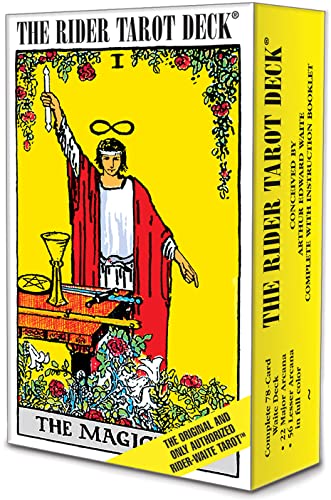
Tarot decks come in countless styles from classic Rider-Waite to modern, inclusive, and themed versions. Choose one that speaks to you visually and emotionally. The art matters, it’s what helps you connect with the cards.
Don’t worry about choosing the “right” deck. The best deck is the one you’ll actually use.
Final Thoughts: Tarot as Empowerment
Tarot isn’t about fate, it’s about freedom.
It doesn’t predict your future, it helps you shape it. It doesn’t tell you who you are, it helps you discover it.
By debunking the myths and embracing tarot as a tool for reflection, we open ourselves to deeper insight, greater clarity, and more intentional living.
So the next time someone scoffs at tarot or warns you it’s dangerous, you can smile and say: “It’s not magic, it’s mindfulness.”
Also read –
Corporate Employees Are Turning to Tarot for Stress Relief, Here’s Why
When Will I Get a New Job? The Astrological Secrets You Need to Know!
Why Rider Waite Tarot Cards Are the Best
FAQ: Frequently Asked Questions
Is tarot really just fortune-telling?
No, tarot is more about reflection than prediction. While some readers use it to explore future possibilities, tarot primarily helps you understand your current mindset, emotions, and choices.
Do I need to be psychic to read tarot cards?
Not at all. Anyone can learn to read tarot. It’s a skill that combines intuition, symbolism, and personal insight. Many readers start with guidebooks and develop their own interpretations over time.
Are tarot cards evil or dangerous?
No. Tarot cards are simply tools with symbolic imagery. They’re not inherently religious or supernatural, and they don’t summon spirits or dark forces. Their meaning comes from how you use them.
Can tarot tell me exactly what will happen in the future?
Tarot doesn’t offer fixed predictions. Instead, it highlights patterns, influences, and potential outcomes based on your current path. It’s more like a compass than a crystal ball.
Is it bad luck to buy your own tarot deck?
That’s a myth. While some traditions suggest receiving a deck as a gift, there’s no rule against buying your own. In fact, choosing a deck that resonates with you can enhance your connection to it.
What’s the difference between tarot and oracle cards?
Tarot follows a structured system of 78 cards with specific archetypes and suits. Oracle cards are more freeform, with varied themes and fewer rules. Both can be used for reflection and insight.
Can tarot help with mental health or emotional clarity?
Yes, many people use tarot as a journaling tool or therapeutic aid. While it’s not a substitute for professional help, it can support mindfulness, self-awareness, and emotional exploration.
Is tarot connected to any religion or belief system?
Tarot is not tied to any one religion. Its imagery draws from various traditions, but it’s a flexible tool that can be adapted to any spiritual or secular worldview.
How do I choose the right tarot deck?
Pick a deck whose artwork and symbolism speak to you. There’s no “right” deck, just one that feels intuitive and inspiring. Rider-Waite is a popular starting point, but many modern decks offer diverse perspectives.
Can I read tarot for myself, or do I need someone else to do it?
You can absolutely read tarot for yourself. Many people use it as a personal practice for reflection, journaling, or decision-making. The key is to approach it with honesty and openness.
![Radiant Rider-Waite in a Tin [With Book and Keepsake Tin]](https://m.media-amazon.com/images/I/51GyKe0gUaL.jpg)
About the Author


2 thoughts on “Tarot Myth Debunked: What It Is and Isn’t”