
The Celestial Shift: What Is Dakshinayan?
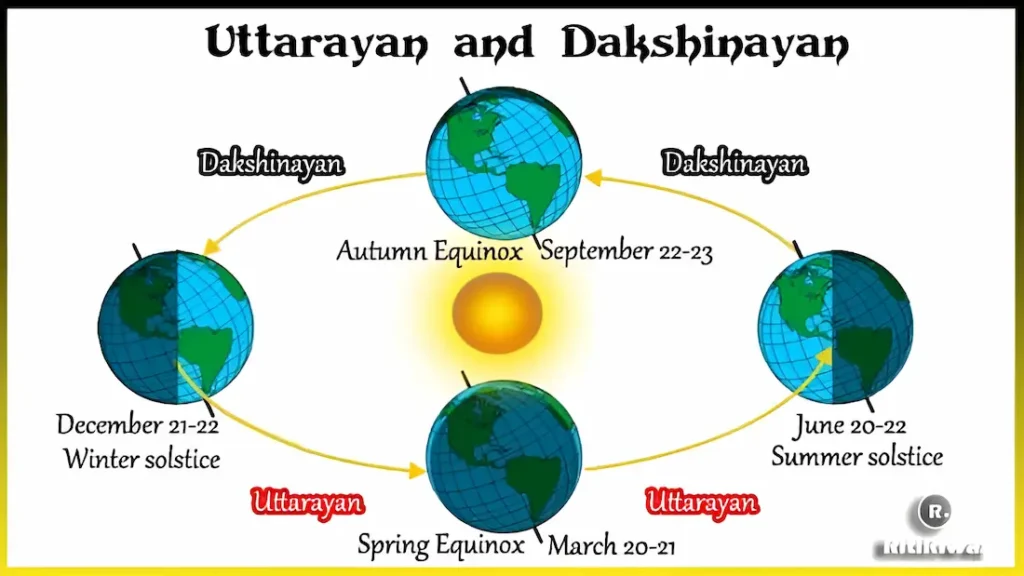
Dakshinayan or Southern Solstice, derived from the Sanskrit words Dakshina (south) and Ayana (movement), marks the six-month period when the sun appears to move southward in the sky from Karka Sankranti (mid-July) to Makara Sankranti (mid-January). This transition is not just astronomical, it’s deeply symbolic in Indian cosmology.
According to the Puranas, Dakshinayan is considered the nighttime of the gods, a phase when divine energies rest and introspection takes precedence. It contrasts with Uttarayan, the sun’s northward journey, which is seen as the gods’ daytime and a period of external action and realization.
In Vedic astronomy, this shift is observed with reverence. The ancients believed that the sun’s movement influences not just seasons, but also human consciousness, agricultural rhythms, and spiritual receptivity. While Uttarayan is associated with manifestation and enlightenment, Dakshinayan is the season of sowing seeds both literal and spiritual.
The Inner Descent: Spiritual and Cosmic Significance
Dakshinayan is often referred to as Sadhana Pada the time for disciplined spiritual practice. This is the phase when Adiyogi Shiva turned south and became Dakshinamurti, transmitting the science of yoga to the Saptarishis. The southward gaze wasn’t arbitrary it aligned with the sun’s descent, symbolizing a journey inward.
Cosmic Resonance
During Southern Solstice, the Earth’s tilt causes the sunlight to soften, and days gradually shorten. This cosmic dimming is mirrored in the human psyche, encouraging introspection, stillness, and inner work. It’s a time when meditation deepens, and the subtle body becomes more receptive to transformation.
Spiritual Implications
Yogic traditions emphasize that sadhana done during Dakshinayan bears long-lasting fruit. Just as a farmer tills the soil before harvest, a seeker prepares the inner field during this phase. The energy supports detoxification, discipline, and grounding qualities essential for spiritual growth.
Symbolism of Darkness
Far from being negative, darkness in Indian philosophy is a womb of potential. Dakshinayan invites us to embrace this darkness not as ignorance, but as the fertile void where wisdom gestates. It’s a sacred pause, a cosmic inhale before the exhale of realization.
The Civilizational Pulse: Dakshinayan’s Impact on Society and Self
Ancient Indian civilization was deeply attuned to celestial rhythms. Festivals, agricultural cycles, and even temple architecture were aligned with the sun’s movement. Dakshinayan, though quieter than its counterpart, shaped the cultural and spiritual ethos of the land.
Agricultural Alignment
Farmers across India begin sowing crops during Dakshinayan, trusting the monsoon rains and the Earth’s readiness. This mirrors the inner sowing of intentions and disciplines in spiritual life. The land and the soul both prepare for eventual harvest.
Cultural Observances
Many significant festivals fall during this period Guru Purnima, Pitru Paksha, Navratri, and Diwali. These are not just celebrations but rituals of remembrance, purification, and renewal. They reflect the collective turning inward of a civilization that honours both light and shadow.
Effect on Individuals
On a personal level, Dakshinayan can bring emotional depth, introspection, and even existential questioning. It’s a time when people naturally feel drawn to solitude, journaling, spiritual reading, and healing practices. Rather than resisting this pull, embracing it can lead to profound clarity and inner alignment.
Final Reflections
Southern Solstice is not a descent into darkness, it’s a descent into depth. In a world obsessed with light, speed, and visibility, this sacred phase reminds us of the power of stillness, shadow, and silence. It’s a cosmic invitation to retreat, reflect, and realign. So as the sun journeys south, let your awareness journey inward. Plant the seeds of intention, water them with discipline, and trust that in due time, the light will return, not just in the sky, but within you.
FAQ: Frequently Asked Questions
-
What is Dakshinayan and when does it occur?
Dakshinayan is the six-month period when the sun appears to move southward on the celestial sphere, beginning around Karka Sankranti (mid-July) and ending at Makara Sankranti (mid-January). It marks the transition from the summer solstice to the winter solstice.
-
Why is Dakshinayan considered spiritually significant in Indian tradition?
In Vedic philosophy, Dakshinayan is seen as the nighttime of the gods, a phase ideal for introspection, spiritual discipline, and inner transformation. It’s believed that practices like meditation and sadhana yield deeper results during this inward-facing period.
-
How does Dakshinayan affect human consciousness and behaviour?
As daylight shortens and cosmic energies shift, individuals often experience a natural pull toward solitude, reflection, and emotional depth. This makes it an ideal time for journaling, healing, and aligning with one’s inner truth.
-
What are some festivals and rituals observed during Dakshinayan?
Major festivals like Guru Purnima, Pitru Paksha, Navratri, Diwali, and Kartik Purnima fall within Dakshinayan. These events emphasize gratitude, purification, and spiritual renewal, echoing the season’s inward journey.
-
Is Dakshinayan considered inauspicious for worldly activities?
Traditionally, auspicious ceremonies like marriages or housewarmings are avoided during Southern Solstice. However, it’s highly auspicious for spiritual pursuits, learning, and selfless service, making it a sacred time for inner growth
Stay updated with the latest news on Rapido Updates. Keep yourself updated with The World, India News, Entertainment, Market, Automobile, Gadgets, Sports, and many more
Also read – Bounce Back Stronger: Why Rope Skipping Is the Secret Weapon for Middle-Aged Women’s Wellness