
Introduction
Durga Puja vs Navratri – India is known as the land of festivals, where the same deity is celebrated in multiple forms across regions. Two of the most vibrant celebrations are Durga Puja and Navratri. At first glance, they might seem similar since both honour Goddess Durga and culminate in Vijayadashami or Dussehra, but the way they are celebrated is quite different.
If you’ve ever wondered about the difference between Durga Puja and Navratri, this detailed guide will take you through their origins, rituals, regional flavors, and shared spiritual meaning.
What is Navratri? The Festival of Nine Nights
The word Navratri means “nine nights.” It is one of the most widely celebrated Hindu festivals, observed with devotion across India.
When is Navratri celebrated?
Navratri occurs twice every year:
Chaitra Navratri (March or April)
Sharad Navratri (September or October)
Spiritual significance:
Each day is dedicated to one form of the Goddess, from Shailputri on the first day to Siddhidatri on the ninth. Devotees believe these days are ideal for spiritual discipline, purification, and invoking divine strength.
Navratri rituals and traditions:
Many observe Navratri fasting by consuming only fruits, curd, milk, and sattvic food.
Daily prayers, chanting mantras, and reading Durga Saptashati.
In Gujarat, people play Garba and Dandiya Raas, vibrant folk dances symbolizing devotion.
In North India, the Ram Leela (drama of Lord Rama’s life) is performed and Dussehra marks Rama’s victory over Ravana.
In short, Navratri is about personal devotion, discipline, and invoking Shakti through fasting and prayer.
What is Durga Puja? The Celebration of the Goddess as Mahishasura Mardini
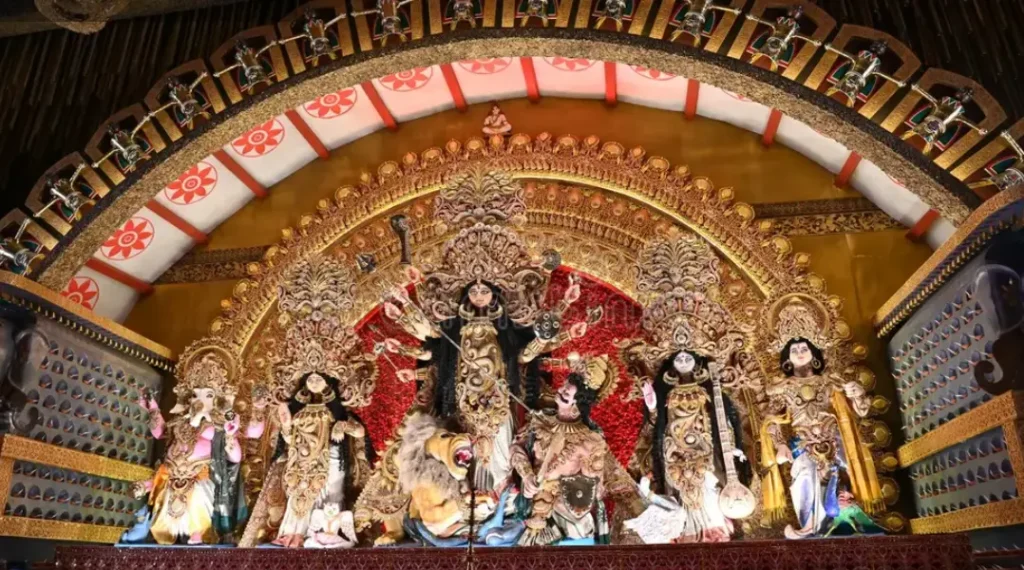
While Navratri is spread across India, Durga Puja, also called Pujo, is deeply rooted in Bengal and eastern India. It focuses on Goddess Durga’s victory over Mahishasura, the buffalo demon.
When is Durga Puja celebrated?
It is observed predominantly during the last five days of Sharad Navratri i.e. Shashthi, Saptami, Ashtami, Navami, and Dashami.
Durga Puja rituals:
Installation of Durga idols in decorated pandals (temporary shrines).
Rituals like pushpanjali, aarti, and dhunuchi dance.
Offerings of bhog, a meal offered to the goddess before distribution among devotees.
On Vijaya Dashami, idols are immersed in water bodies in a ritual called Visarjan, marking her return to Mount Kailash.
Cultural highlights of Durga Puja:
Artistic competition of pandals and each pandal is themed uniquely.
Literature, music, and traditional dances.
Special Bengali delicacies like khichuri, luchi, mishti, and sweets.
Durga Puja is not just a festival; it is a cultural extravaganza that combines worship with art, food, and community joy.
Durga Puja vs Navratri: Key Differences
Here’s a breakdown of how Durga Puja is different from Navratri:
| Aspect | Durga Puja | Navratri |
| Regions | Bengal, Assam, Odisha, Tripura, Bangladesh | Pan-India (esp. Gujarat, Maharashtra, North India) |
| Duration | 5 days (Shashthi to Dashami) | 9 days (Navratri) |
| Main Focus | Goddess Durga as Mahishasura Mardini | Nine forms of Goddess Durga |
| Celebration Style | Pandal hopping, idol worship, cultural programs | Fasting, meditation, Garba, Ram Leela |
| Climax | Idol immersion (Visarjan) | Dussehra (burning Ravana effigies) |
| Food Culture | Feasts, bhog, Bengali delicacies | Sattvic food, fasting recipes |
| Expression | Outward cultural grandeur | Inward personal devotion |
Durga Puja Rituals vs Navratri Fasting
One of the biggest differences is in the way people express devotion:
In Navratri, fasting is central. Devotees practice self-control, avoid tamasic food like onion, garlic, and non-vegetarian items, and dedicate time to prayer. Vegetarian Food stalls, recreation stalls are set up near to the Garba grounds. Many devotees avoid shaving and cutting of hair and nails and sleep on a mat on the floor. The idea is to purify the body and mind.
In Durga Puja, food is an integral part of devotion. Community feasting, elaborate bhog, and Bengali sweets are offered. Everyday new clothes are worn and whole family rejoices and celebrates in the pandal. Anando Mela is celebrated where homemade food is sold in the stalls at the pandal.
During the day time, the prasad/bhog is totally vegetarian and is offered to the Goddess first after which the devotees eat in a pangat (community eating in an organised way) in the area dedicated for eating.
Evenings people eat non veg food (especially fish and Kolkatta Biryani), variety of street food and delicious sweets in the food stalls. There are entertainment arrangements like Ferry wheel, burst the balloons, some shops of sarees and dress material etc It’s as much about celebration as about discipline.
Navratri vs Durga Puja Significance
While both festivals honor Goddess Durga, their spiritual focus differs:
Navratri significance: Strengthening inner discipline, cleansing negative energies, and preparing the mind for spiritual growth.
Durga Puja significance: Celebrating the goddess as a protector, destroyer of evil, and symbol of cultural unity.
Both festivals converge on Vijayadashami, symbolizing the victory of light over darkness.
Regional Variations: Different Colors of the Same Festival
In Gujarat: Navratri means Garba nights, wearing colorful attire, fasting, and temple rituals. Men, women and children all dance together on the traditional songs and rejoice the whole nights. Huge grounds are booked in advance to celebrate this festival. The entire community comes together and dances to the tunes.
In North India: Ram Leela performances dominate, culminating in Ravana effigy burning. Kanya bhoj is performed on the Ashtami or Navami in households who fast for 8 or 9 days for this festival. Few people do not eat anything at all, few eat Satvik food once a day and the other meal consists of just fruits, a few fast with just having fruits.
In Bengal and Assam: Durga Puja is celebrated with grandeur, pandal artistry, and idol worship which ends up with playing with Sindoor known as the Sindoor Khela along with a beautiful dance. Women dress up in red and white sarees and dance with dhuni which is truly spectacular.
In South India: Navratri is marked by Golu, the display of colourful dolls representing mythology and culture along with haldi kunku, a ladies function where the married ladies apply turmeric and vermilion on each other foreheads and distribute small gifts along with beetle leaf, turmeric and prasad.
This proves that while the goddess is one, her celebration takes many beautiful forms across India.
Common Spiritual Message of Durga Puja and Navratri
Despite differences in rituals and expressions, both festivals share a universal spiritual lesson:
Good always triumphs over evil.
Shakti (divine feminine energy) is the foundation of creation and destruction.
Festivals are a reminder to conquer inner demons like ego, anger, and greed.
Whether you fast and meditate during Navratri or join the crowd at a Durga Puja pandal, the essence remains the same i.e. awakening divine power within.
Conclusion:
When we compare Durga Puja vs Navratri, the differences are clear: one emphasizes fasting and inward devotion, the other celebrates grandeur and outward expression. Yet, at their heart, both honor the Goddess as the destroyer of evil and the giver of strength.
Durga Puja and Navratri are not rivals but complementary celebrations, two petals of the same divine flower. Together, they show us that the goddess can be celebrated both within the heart and across the community.
Also read – How to Celebrate Shardiya Navratri 2025: Rituals, Dates & Devotion
FAQs: Frequently Asked Questions:
-
Is Durga Puja a part of Navratri?
Yes. Durga Puja is celebrated in the last five days of Sharad Navratri.
-
Which is older: Navratri or Durga Puja?
Navratri is the broader festival, while Durga Puja developed regionally in Bengal with unique rituals and artistry which is now being celebrated in other States of India and abroad too.
-
What is the difference between Durga Puja and Navratri food traditions?
Navratri emphasizes fasting and sattvic food, while Durga Puja includes bhog, sweets, and festive feasting.
-
Do Durga Puja and Navratri end on the same day?
Yes, both conclude with Vijayadashami, also known as Dussehra.
-
Which is more popular, Durga Puja or Navratri?
It depends on the region. Durga Puja dominates Bengal and eastern India, while Navratri is celebrated widely across western, northern, and southern India. Both the festivals are also celebrated Globally.