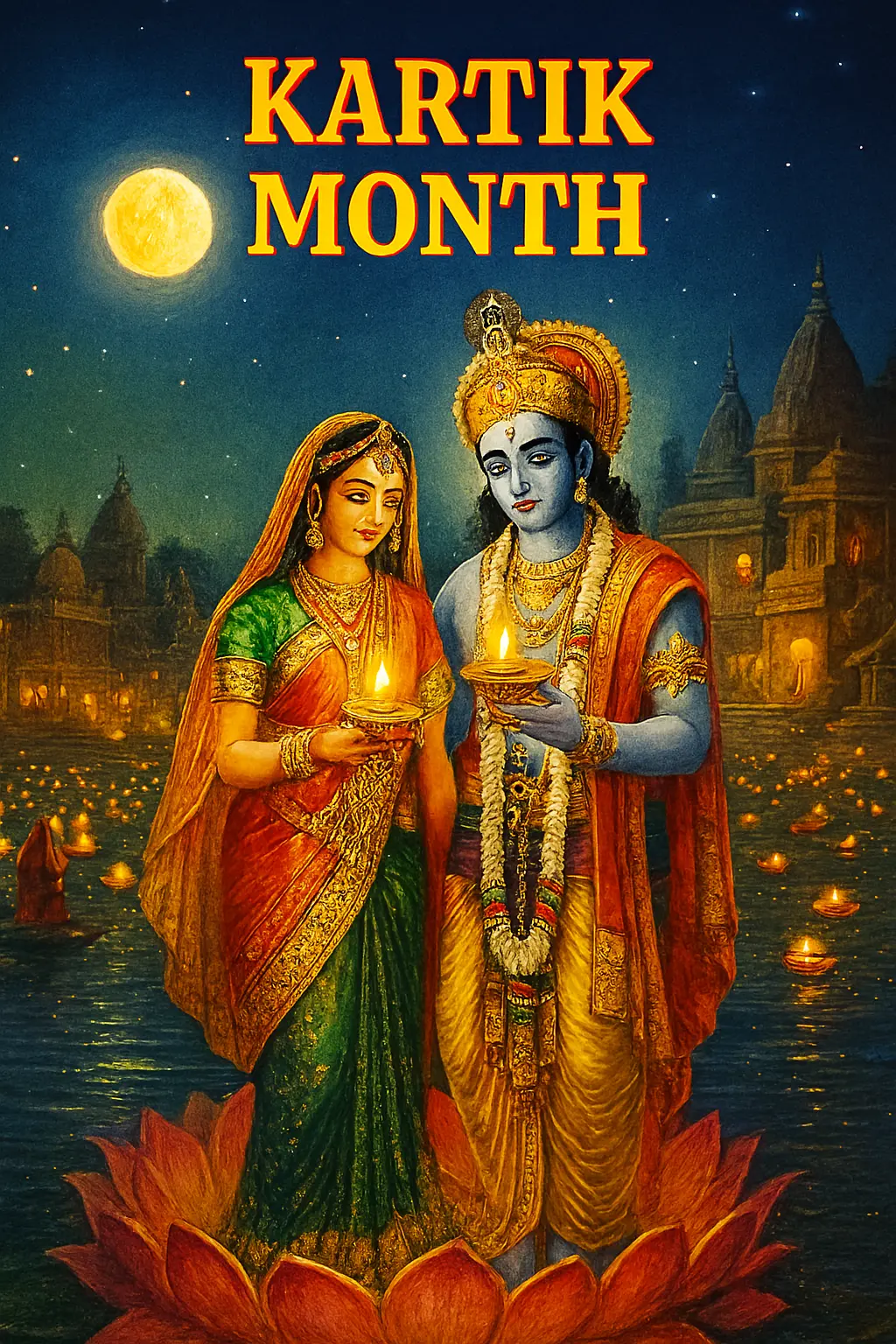
: Kartik month is considered the holiest month in Hinduism, dedicated to Lord Vishnu and Goddess Lakshmi.
Why Kartik Month Holds Immense Significance in Hinduism
Published on: 06-10-2025 | By: Forge Your Best Self
As the crisp mornings of October arrive, millions of Hindus across the world prepare for Kartik month, a period regarded as the most sacred in the Hindu lunar calendar. Often described as a time of heightened spiritual energy, Kartik month is not merely a series of rituals; it is an invitation to align one’s actions, thoughts, and intentions with the rhythms of the cosmos.
Picture this: the ghats of Varanasi at dawn, lamps reflecting on the flowing Ganges, the gentle chanting of devotees, and a sense of calm that seems to pervade the city. This is the essence of Kartik month, a harmonious blend of devotion, reflection, and renewal.
Kartik Month in Hinduism is the lunar month considered most sacred for worshipping Lord Vishnu, Tulsi, and performing charity and fasting.
Spiritual Significance of Kartik Month
Kartik month, also referred to as Damodara Masa, is intrinsically linked to Lord Vishnu and his various incarnations, including Krishna. Scriptural texts such as the Padma Purana emphasise that spiritual deeds performed during this month carry exponentially higher merit.
- Lord Vishnu/Lord Krishna Worship: Devotees offer prayers, light lamps, and chant mantras, seeking clarity, prosperity, and removal of obstacles.
- Tulsi Worship: The sacred Tulsi plant is nurtured and revered, believed to bring spiritual merit and household harmony.
- Charity and Fasting: Acts of kindness, giving to the needy, and observing Ekadashi fasts purify the mind and foster good karma.
Kartik month is considered the holiest month in Hinduism, dedicated to Lord Vishnu and Goddess Lakshmi. In essence, Kartik month is an opportunity for introspection, self-discipline, and fostering a sense of interconnectedness.
Kartik Month Rituals and Observances
While the rituals may vary regionally, several practices are widely observed:
- Early Morning River Baths: Symbolic of purification and renewal.
- Lighting Lamps: Deepdaan, or the act of lighting lamps, represents illumination and the dispelling of negativity.
- Tulsi Vivah: A ceremonial wedding of the Tulsi plant to Lord Vishnu, symbolising devotion and prosperity.
- Meditation and Chanting: Many use rosary malas for japa or place crystals under moonlight to enhance spiritual energy.
These observances are not mere traditions; they are practices rooted in a holistic understanding of mind, body, and spirit alignment.
Regional Variations Across India
Kartik month is celebrated uniquely across India, reflecting cultural diversity:
- North India: Dev Deepawali in Varanasi sees thousands of lamps illuminate the ghats.
- West India: Ekadashi fasts and devotional gatherings are prominent.
- South India: Temples host special rituals for Lord Vishnu and his avatars.
- East India: Tulsi Puja and devotional singing connect families and communities.
Despite these differences, the central theme remains universal: purity, devotion, and alignment with the divine.
Scientific and Ayurvedic Perspective
Interestingly, modern science and Ayurveda offer insights into the benefits of Kartik observances:
- Seasonal Transition: Morning rituals during the autumn-to-winter shift boost immunity and circulation.
- Fasting Benefits: Observing intermittent fasts supports digestion, detoxification, and metabolic regulation.
- Circadian Alignment: Rituals such as lighting lamps or meditating in early mornings enhance mental clarity and circadian rhythm.
These practices demonstrate a remarkable convergence of ancient wisdom and modern science.
Modern Spiritual Practices
Kartik month is increasingly being observed with contemporary tools:
- Crystals: Amethyst, citrine, and quartz can be placed under moonlight to absorb energy.
- Rosary Malas: Using malas for japa enhances focus and mindfulness.
- Tarot Cards: Some practitioners cleanse and charge their decks during Kartik Purnima to sharpen intuition.
These modern adaptations blend age-old traditions with practical spiritual tools for professionals and urban practitioners.
Professional Takeaways
Observing Kartik month can also benefit professionals in subtle ways:
- Mindfulness: Meditation and chanting promote focus and clarity at work.
- Intentionality: Rituals encourage setting intentions and goals consciously.
- Work-Life Balance: Aligning personal spiritual practices with daily life fosters emotional resilience.
- Networking: Participating in community rituals can strengthen social connections and community ties.
In other words, the month offers lessons in discipline, mindfulness, and conscious action—qualities highly relevant in a corporate or professional context.
Conclusion
Kartik month is more than a period of religious observance. It is a time to cultivate discipline, reflection, and spiritual alignment. Whether through lighting lamps, performing charitable acts, or meditating with malas and crystals, it is an invitation to consciously align with cosmic rhythms.
For professionals and spiritual seekers alike, Kartik month serves as a reminder that devotion, discipline, and mindfulness are timeless practices that can enrich both personal and professional life.
Call to Action
This Kartik month , why not integrate spiritual practices into your routine? Light lamps, meditate, offer acts of charity, and explore how tools like rosary malas or crystals can enhance mindfulness. Share these moments with family, colleagues, or your professional network to cultivate a sense of balance and intention in everyday life.
👉 Also read: Complete Guide to Hindu Festivals in October 2025
About the Author





8 thoughts on “Why Kartik Month Is a Transformative Time for Spiritual Growth in Hinduism”