
Introduction
Navratri, one of the most celebrated festivals of India, is dedicated to Goddess Durga and her nine divine forms. The word Navratri means “nine nights,” and during these days, devotees observe fasting, meditation, and puja rituals to invite the blessings of the Goddess. Among the most important spiritual practices during this period are chanting mantras and performing Navratri Puja at home.
In this complete guide, we will explore step-by-step rituals for Navratri Puja, the most powerful Navratri mantras, their meanings, and the benefits of chanting them.
Why is Navratri Puja Important?
Performing Navratri Puja at home brings divine blessings, purifies the mind, and strengthens spiritual energy. It symbolizes victory of good over evil and invokes the presence of Goddess Durga to remove negativity and obstacles from life. Devotees believe that regular puja and mantra chanting during these nine days ensures health, wealth, peace, and prosperity.
How to Do Navratri Puja at Home (Step-by-Step Rituals + Mantras)
Step 1: Clean and Purify the Space
- Clean the puja area.
- Sprinkle Ganga jal (holy water) to purify the surroundings.
- Place a clean cloth or chunari on the altar.
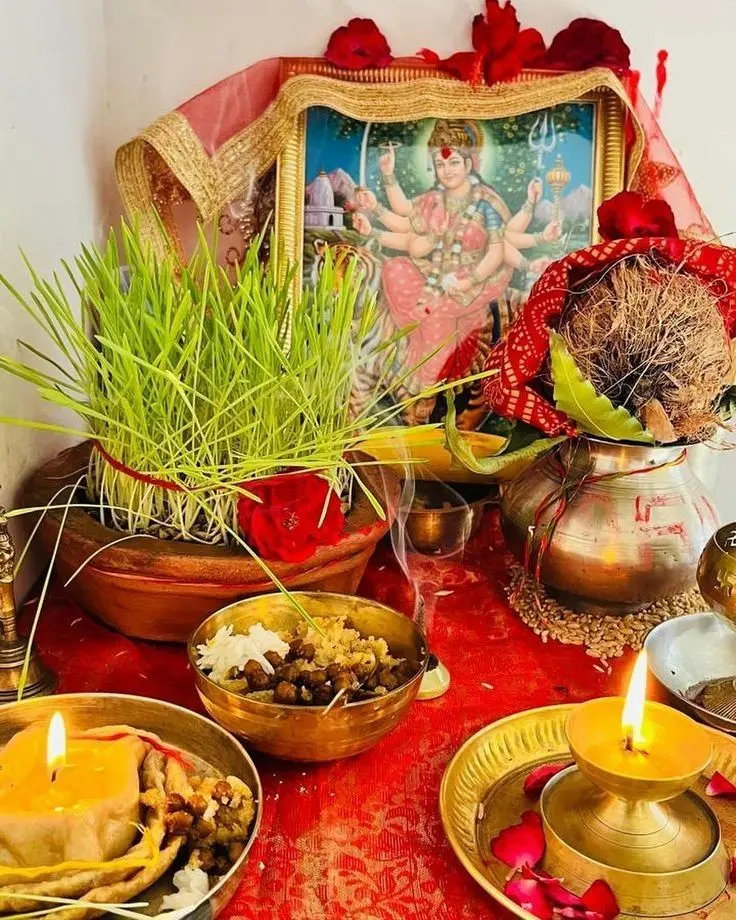
Step 2: Set Up the Kalash (Sacred Pot)
- Fill a clay, brass, or copper pot with water, rice, coin, and mango leaves.
- Place a coconut wrapped in red cloth on top.
- The Kalash represents Goddess Durga herself.
Mantra while placing Kalash:
“Om Aim Hreem Kleem Chamundayai Vichche”
Step 3: Invoke Goddess Durga
- Place an idol or picture of Maa Durga on the altar.
- Light a diya and incense.
- Offer flowers and perform sankalp (prayer of intention).
Step 4: Panchopchar Puja (Five Offerings)
- Dhoop (incense)
- Deep (lamp)
- Naivedya (fruits/sweets)
- Pushpa (flowers)
- Gandh (sandalwood/tilak)
Chanting:
“Ya Devi Sarva Bhuteshu Shakti Rupena Samsthita,
Namastasyai Namastasyai Namastasyai Namo Namah.”
या देवी सर्वभूतेषु शक्ति रूपेण संस्थिता।
नमस्तस्यै नमस्तस्यै नमस्तस्यै नमो नमः॥
Step 5: Daily Mantra Chanting
- Chant the Navratri day-specific mantra (Shailputri to Siddhidatri).
- If unable to chant all, use the universal Durga mantra:
“Om Dum Durgayei Namah”
Step 6: Perform Aarti
- Sing Durga Aarti with diya and bell.
- Rotate diya clockwise in front of Maa Durga.
Step 7: Offer Bhog (Food Offering)
- Cook satvik food (no onion, garlic, or meat).
- Common bhog: fruits, kuttu halwa, kuttu puri, lauki ki kheer.
- Offer before family eats.
Step 8: Kanya Puja (Ashtami or Navami)
- Worship 9 young girls (symbolizing Nav Durga).
- Wash their feet, offer kumkum, flowers, food, and gifts.
Step 9: Conclude with Shanti Path
- On the 9th day, perform havan if possible.
- Chant:
“Om Dyauh Shantir Antariksham Shantih
Prithivi Shantir Aapah Shantir Oshadhayah Shantih”
Powerful Navratri Mantras and Their Meanings
Universal Durga Mantra
“Om Dum Durgayei Namah” ॐ दुं दुर्गायै नमः
- Meaning: I bow to Goddess Durga, remover of miseries.
- Benefit: Protection from negativity and fear.
This is a powerful beej mantra dedicated to Goddess Durga. Each syllable carries deep spiritual resonance:
- ॐ – The universal sound, source of all creation
- दुं – Beej (seed) mantra of Durga, invoking her protective energy
- दुर्गायै – To Goddess Durga, the remover of obstacles
- नमः – I bow with reverence
It’s often chanted during Navratri and Durga Puja to invoke strength, courage, and divine protection.
Day-Wise Navratri Mantras
- Day 1 – Maa Shailputri:
“Om Devi Shailputryai Namah” ॐ देवी शैलपुत्र्यै नमः
- Stability and courage.
- Day 2 – Maa Brahmacharini:
“Om Devi Brahmacharinyai Namah” ॐ देवी ब्रह्मचारिण्यै नमः
- Patience, discipline, wisdom.
- Day 3 – Maa Chandraghanta:
“Om Devi Chandraghantayai Namah” ॐ देवी चन्द्रघण्टायै नमः
- Removes fear, brings peace.
- Day 4 – Maa Kushmanda:
“Om Devi Kushmandayai Namah” ॐ देवी कूष्माण्डायै नमः
- Health, positivity, vitality.
- Day 5 – Maa Skandamata:
“Om Devi Skandamatayai Namah” ॐ देवी स्कन्दमातायै नमः
- Motherly love, prosperity.
- Day 6 – Maa Katyayani:
“Om Devi Katyayanyai Namah” ॐ देवी कात्यायन्यै नमः
- Blessings for marriage, strength.
- Day 7 – Maa Kalaratri:
“Om Devi Kalaratryai Namah” ॐ देवी कालरात्र्यै नमः
- Removes darkness, destroys evil.
- Day 8 – Maa Mahagauri:
“Om Devi Mahagauryai Namah” ॐ देवी महागौर्यै नमः
- Purity, peace, fulfillment of desires.
- Day 9 – Maa Siddhidatri:
“Om Devi Siddhidatryai Namah” ॐ देवी सिद्धिदात्र्यै नमः
- Spiritual wisdom, success.
Benefits of Navratri Mantras and Puja
- Protection from negativity and evil forces
- Brings peace, happiness, and health
- Strengthens faith and inner discipline
- Attracts prosperity and blessings
- Enhances meditation and concentration
Conclusion
Navratri is a time of devotion, discipline, and divine connection. Performing Navratri Puja at home with rituals, mantras, and fasting creates a sacred environment where the presence of Goddess Durga is felt deeply. By chanting powerful Navratri mantras and following simple daily puja steps, devotees invite courage, peace, and prosperity into their lives.
This Navratri, may Maa Durga bless you with strength to overcome difficulties and the wisdom to walk on the right path.
Also read – How to prepare for Navratri 2025: Puja Samagri and Shopping Guide
Frequently Asked Questions (FAQs):
-
What is the best time to start Navratri Puja at home?
Begin with Kalash Sthapana (Ghatasthapana) on Pratipada Tithi, ideally during the morning Abhijit Muhurat for maximum auspiciousness.
-
What items are needed for Navratri Puja setup at home?
Essentials include: Kalash, coconut, mango leaves, red/yellow cloth, diya, incense, flowers, fruits, sweets, and an image or idol of Maa Durga.
-
How do I perform daily Navratri rituals at home?
Light a diya morning and evening, offer fresh flowers, chant Durga mantras, and present bhog. Recite Durga Saptashati or stutis for deeper devotion.
-
Can I perform Navratri Puja without fasting?
Yes. Fasting is optional but spiritually beneficial. You can still perform rituals, chant mantras, and observe satvik living without a full fast.
-
What are the rules for Navratri fasting at home?
Avoid grains, onion, garlic, and processed foods. Eat satvik meals like fruits, milk, and vrat-friendly flours. Stay mentally pure and spiritually focused.
-
Which mantras should I chant during Navratri Puja?
Popular chants include:
ॐ दुं दुर्गायै नमः
या देवी सर्वभूतेषु शक्ति रूपेण संस्थिता।
नमस्तस्यै नमस्तस्यै नमस्तस्यै नमो नमः॥
Daily Navadurga mantras based on the goddess of the day -
What is Kanya Puja and when should it be done?
Kanya Puja is performed on Ashtami or Navami, honouring nine young girls as embodiments of Durga. Offer food, gifts, and wash their feet with reverence.
-
Can couples or families perform Navratri Puja together?
Absolutely. Joint puja and aarti strengthen spiritual harmony in the household. Couples observing fast together are believed to receive enhanced blessings.
-
Is it necessary to read Durga Saptashati during Navratri?
While not mandatory, reading or listening to Durga Saptashati enhances spiritual energy and invokes the goddess’s divine protection.
-
What are the benefits of performing Navratri Puja at home?
It brings peace, prosperity, protection, and spiritual upliftment. Devotees feel more connected to divine energy and experience emotional cleansing and clarity.