
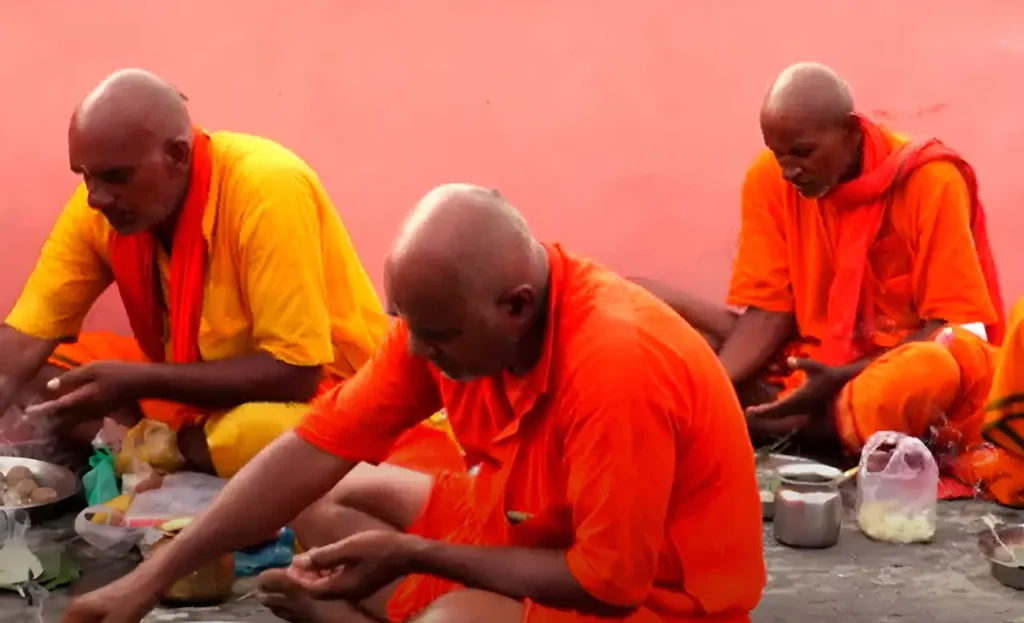
Introduction: A Time When Ancestors Walk Among Us
Pitru Paksha 2025 – It is said in the Garuda Purana that during a special fortnight of the year, the souls of our ancestors descend to earth, waiting for offerings from their descendants. This sacred period is known as Pitru Paksha, it’s a 16-day cycle when families remember their forefathers with love, gratitude, and ritual offerings called Shraddha.
In 2025, Pitru Paksha will begin on Sunday, September 7, 2025, and end on Sunday, September 21, 2025, culminating in Sarva Pitru Amavasya (also known as Mahalaya Amavasya).
This sacred time reminds us that life is a flowing river of generations, and we are only a link in this eternal chain.
Why Pitru Paksha is Observed: The Story Behind It
The origin of Pitru Paksha is found in the Mahabharata and the Matsya Purana. The most famous story belongs to Karna, the great warrior of the Mahabharata.
Karna was known for his unmatched generosity; he gave away wealth, gold, and food throughout his life. But when he died and entered heaven, he was offered gold and jewels instead of food. Puzzled, he asked why he was denied food. The ancestors replied:
“You gave wealth but never offered food to your forefathers. Therefore, you cannot be nourished here.”
Karna prayed for a chance to correct this. Yama, the god of death, allowed him to return to earth for 16 days. During this period, Karna fed the poor, offered water and food to Brahmins, and performed Shraddha for his ancestors. This became the tradition of Pitru Paksha.
Thus, Pitru Paksha is not merely a ritual but an act of repaying the karmic debt to our ancestors, known as Pitru Rin. By offering food, water, and prayers, we ensure peace for their souls and blessings for our family.
How Many Days is Pitru Paksha?
Pitru Paksha lasts for 16 lunar days, beginning from the full moon (Purnima) and ending on the new moon (Amavasya) of the month of Bhadrapada (September–October).
In 2025, Pitru Paksha will run from September 7 (Purnima Shraddha) to September 21 (Sarva Pitru Amavasya).
Each day corresponds to the tithi (lunar date) on which a family member may have passed away. Families traditionally perform Shraddha on that particular day, though the last day (Sarva Pitru Amavasya) is universal for all.
Rituals of Pitru Paksha: A Day-to-Day Journey
1. First Day Rituals (September 7, 2025 – Purnima Shraddha)
On the first day, Shraddha is performed for those who departed on the full moon day. The rituals include:
- Taking a holy bath and wearing clean, simple clothes.
- Preparing a place facing south (the direction of Yama, the god of death).
- Offering black sesame seeds mixed with water (Tarpan).
- Preparing simple meals with rice, lentils, ghee, and seasonal vegetables.
- Feeding Brahmins, priests, or needy people in remembrance of the ancestors.
This first day sets the tone, inviting the ancestors to accept the offerings.
2. Middle Days (September 8–20, 2025 – Daily Shraddha)
Each subsequent day is devoted to ancestors who passed away on that specific lunar date. The rituals remain similar:
- Lighting a lamp and incense to invite the departed.
- Performing Pind Daan (offering rice balls made of sesame, barley, and ghee).
- Reciting mantras from the Garuda Purana or Vishnu Purana.
- Offering food like kheer, rice, pumpkin curry, dal, and ghee-roti.
Families believe that through these offerings, the ancestors bless them with prosperity, harmony, and protection from obstacles.
3. The Last Day: Sarva Pitru Amavasya (September 21, 2025)
The final day, also known as Pitru Moksha Amavasya, is the most significant. It is believed that even if a person does not know the date of their ancestor’s death, they can perform Shraddha on this day for all departed souls.
The rituals include:
- Offering Pind Daan at a sacred riverbank (like Ganga, Yamuna, or local holy ponds).
- Cooking a full meal with rice, dal, pumpkin, arbi (taro root), and seasonal vegetables.
- Offering food to cows, crows, and dogs, as they are believed to be messengers of the ancestors.
- Feeding the poor or distributing food packets.
This day completes the cycle of Pitru Paksha, ensuring that no soul is left without remembrance.
What Food is Cooked During Pitru Paksha?
Food is central to Pitru Paksha. The offerings are always Satvik (pure and vegetarian). Some common items include:
- Kheer (rice pudding with milk and jaggery) – believed to nourish the souls.
- Rice and Urad Dal Khichdi – a staple offering.
- Pumpkin (Kaddu), Arbi (taro root), and Lauki (bottle gourd) curries.
- Pooris .
- Seasonal fruits.
Special importance is given to sesame seeds, barley, and kusa grass, which are considered sacred in Puranic texts.
It is believed that when these offerings are made with devotion, the ancestors accept them and, in return, shower blessings on their descendants.
Precautions During Pitru Paksha
The Garuda Purana mentions several do’s and don’ts for this period:
Do’s
- Perform Shraddha with sincerity, faith, and a clean mind.
- Feed cows, crows, ants, and dogs, as they are considered carriers of ancestral blessings.
- Observe simplicity by eating Satvik food, avoid overindulgence.
Don’ts
- Avoid starting new ventures, marriages, or celebrations during these 16 days.
- Do not cut hair or nails.
- Avoid eating non-vegetarian food, onion, garlic, or alcohol.
- Do not disrespect elders or ignore needy people.
These precautions keep the spiritual energy of the rituals intact.
Modern Views on Pitru Paksha
Pitru Paksha has been observed for centuries, and while many families continue the rituals with deep faith, today’s generation often sees it in new ways.
For some, it is still a spiritual practice that helps them feel connected to their ancestors. Offering food and prayers becomes a way to express gratitude and invite blessings into their lives.
Others, especially younger people, may take part more as a mark of respect for their parents and cultural roots, even if they do not fully believe in the deeper spiritual aspects.
At the same time, there are also debates around its relevance in today’s world. Questions are raised about traditional gender roles in the rituals, the growing commercialization of the practices, and the possible environmental impact.
In short, Pitru Paksha is viewed differently today, some hold on to its sacred essence, some follow it as tradition, while others see it as a practice that may need change in modern times.
The Spiritual Meaning of Pitru Paksha
On the surface, Pitru Paksha may look like a ritual of feeding and offering. But on a deeper level, it is a reminder that:
- We are not separate from our lineage; we are the continuation of our ancestors.
- Gratitude and remembrance purify the karmic chain.
- By honoring the past, we pave the way for a smoother future.
Pitru Paksha thus becomes not just a religious observance but a practice of ancestral healing.
Why People Avoid Non-Vegetarian Food and Alcohol
During Pitru Paksha, many families choose to stay away from meat and alcohol. This isn’t just about rules, it has a deeper meaning.
- Eating light and pure: Vegetarian food is believed to be sattvic, or pure, which helps create a peaceful atmosphere for prayers and offerings.
- Staying disciplined: Alcohol and meat are thought to bring heaviness, laziness, or even aggression. Avoiding them keeps the mind calm and focused on rituals.
- Honoring ancestors: The idea is to live simply and mindfully, shifting attention from personal enjoyment to remembrance of those who came before us.
Why People Don’t Cut Hair or Nails
Another common practice during Pitru Paksha is avoiding haircuts or nail trimming. This may seem small, but it carries symbolic weight.
- A time of mourning: Since Pitru Paksha is like a remembrance period, avoiding grooming shows humility and respect.
- Letting go of vanity: Cutting hair or nails is linked with beautification. By pausing this, people step back from worldly distractions.
- Beliefs about energy: Some traditions say that cutting hair or nails at this time may disturb the subtle energies connected to ancestral prayers.
The Deeper Meaning
At heart, these customs are not about fear or superstition. They are about creating a sacred space in body, mind, and spirit. Whether you follow them strictly or in a symbolic way, they encourage us to pause, live simply, and remember our roots with gratitude.
Conclusion
Pitru Paksha 2025 (September 7–21) is more than a fortnight of rituals. It is a sacred reunion with our ancestors. Rooted in Puranic wisdom and passed down through generations, it reminds us to stay grounded, grateful, and connected to our roots.
By following the rituals, be it offering sesame seeds, cooking Satvik meals, or feeding the poor, we ensure that our forefathers rest in peace and continue to guide us with unseen blessings.
This Pitru Paksha, may every offering you make become a bridge of love, healing, and continuity between you and those who walked before you.
FAQ: Frequently Asked Questions:
-
When is Pitru Paksha in 2025?
Pitru Paksha in 2025 will begin on September 7 (Purnima Shraddha) and end on September 21 (Sarva Pitru Amavasya).
-
Can I perform Shraddha if I don’t know my ancestor’s death date?
Yes, you can perform Shraddha on Sarva Pitru Amavasya, which is meant for all ancestors.
-
Is it necessary to perform Shraddha at Gaya or a holy river?
While Gaya in Bihar is considered highly sacred, Shraddha can be performed at home or at any local river/pond with devotion.
-
What foods should be avoided during Pitru Paksha?
Non-vegetarian food, alcohol, onion, garlic, and highly processed food should be avoided.
-
What if someone cannot perform the rituals personally?
One can arrange for priests or temples to perform the rituals on their behalf. Even offering food to the needy with a prayer in mind is considered meritorious.