
Why Everyone Should Do Tulsi Vivah: The Sacred Union That Brings Prosperity and Peace
Introduction
In Hindu tradition, few rituals carry as much spiritual energy and symbolism as Tulsi Vivah, the sacred marriage of Goddess Tulsi (Holy Basil) and Lord Vishnu. Celebrated during Kartik month, this ritual marks the beginning of the auspicious marriage season and holds deep significance for both householders and spiritual seekers.
Many people think Tulsi Vivah is only for married women, but in truth, anyone: young, old, married, or single can perform it. It’s a ritual that purifies karma, opens the path to prosperity, and invites divine blessings into one’s life.
The Story Behind Tulsi Vivah
According to sacred texts, Goddess Tulsi was once Vrinda, a devoted wife of the demon king Jalandhar. Her unshakable faith and purity made her husband invincible. To restore balance, Lord Vishnu took Jalandhar’s form and broke her vow. When Vrinda realized the truth, she cursed Lord Vishnu to turn into a stone (the Shaligram) and burned herself.
Out of compassion, Lord Vishnu blessed her to be born as the sacred Tulsi plant and promised to marry her every year in the month of Kartik. This divine union symbolizes the merging of devotion and divinity, reminding devotees that true love transcends lifetimes.
Why Everyone Should Perform Tulsi Vivah
- It Balances Karmic Energy: Tulsi Vivah is a powerful karmic remedy. Offering prayers to Tulsi and Vishnu together helps dissolve past life patterns linked to heartbreak, financial struggles, or unfulfilled desires.
- It Brings Prosperity and Stability: The union of Tulsi and Vishnu symbolizes wealth meeting wisdom. Performing the ritual helps align your home’s energy with abundance and protection.
- It Strengthens Family Bonds: Tulsi Vivah teaches the importance of love, loyalty, and sacred relationships. It brings harmony between couples and family members.
- It Purifies the Home: The Tulsi plant itself is a natural energy cleanser. Worshiping it during Vivah transforms the home into a sacred space.
- It Helps Manifest True Love: For singles, Tulsi Vivah acts as a spiritual marriage blessing, helping attract a compatible partner and release emotional blockages.
How to Perform Tulsi Vivah at Home
- Choose the Date: Tulsi Vivah is performed on Kartik Shukla Ekadashi which is on November 1st, 2025.
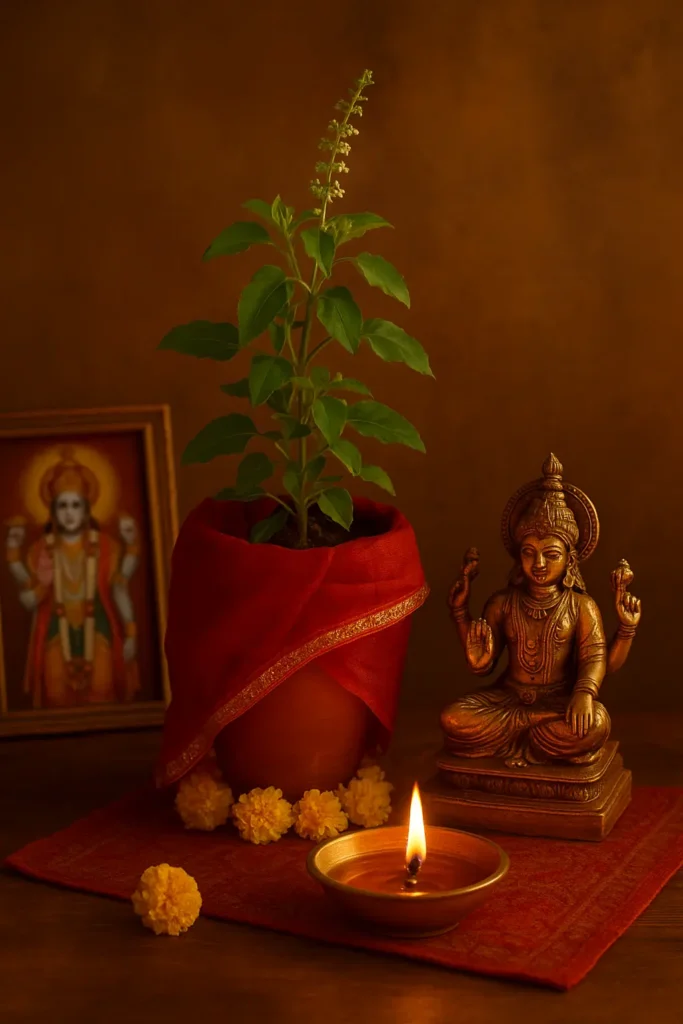
- Prepare the Setup: Place the Tulsi plant in a clean area. Clean and paint the pot with red color and make holy symbols like swastik and Om on the pot. Make a mandap with sugarcanes. Decorate with a rangoli, Ashoka leaves, marigold flowers, rajnigandha flowers, diyas, or fairy lights. Beside the Tulsi plant, keep a Shaligram stone or an image/idol of Lord Vishnu.
- Decorate the Tulsi Plant: Adorn it with flowers, a red cloth or skirt, bangles, and a small veil, just like a bride.
- Perform the Ritual: Light a ghee diya, offer kumkum, haldi, rice (akshat), sindoor, chant Vishnu mantras, and offer turmeric, sandalwood paste, incense sticks, flowers, and sweets.
- Tie the Knot: Symbolically tie a sacred thread (mauli) between the Tulsi and Vishnu image or Shaligram stone to complete the marriage.
- Distribute Prasad: Offer sweets and fruits to family and neighbors to spread divine blessings.
Spiritual Message of Tulsi Vivah
Tulsi Vivah is more than a festival; it’s a reminder that every soul has both divine and human aspects. The union of Tulsi and Vishnu reflects balance between heart and purpose, devotion and detachment, action and surrender.
When you perform this ritual, you symbolically unite your inner masculine (willpower) and feminine (faith) energies. This inner harmony attracts outer abundance, peace, and love.
5 Reflection Questions After Performing Tulsi Vivah
- What karmic patterns am I ready to release this Kartik month?
- Where in my life do I need more harmony: money, relationships, or peace?
- How can I bring more devotion into my daily routine?
- What does spiritual union mean to me personally?
- How can I honor both love and purpose in my life choices?
Final Words
Performing Tulsi Vivah is not only about following tradition, it’s about reconnecting with the divine energy that sustains life. Whether you seek love, prosperity, or inner peace, this ritual is a gentle yet profound way to realign your karma and open your heart to grace.
This Kartik month, light a diya near Tulsi, recite Lord Vishnu’s name, and offer your prayers. You’ll feel the subtle transformation begin from within — a quiet sense that life is shifting toward blessings, balance, and joy.
Frequently Asked Questions (FAQs)
1. Can unmarried people perform Tulsi Vivah?
Yes, anyone can perform Tulsi Vivah. It blesses unmarried individuals with good alliances and removes emotional or karmic blocks in love.
2. What offerings are made during Tulsi Vivah?
Offer flowers, fruits, betel leaves, sweets, a red dupatta, and turmeric. You can also offer Tulsi leaves to Lord Vishnu.
3. Is it necessary to have a Shaligram for the ritual?
If you don’t have a Shaligram, you can use an image or idol of Lord Vishnu, Krishna, or Narayan.
4. What are the benefits of keeping a Tulsi plant at home?
Tulsi purifies the air, uplifts energy, and attracts divine blessings. It’s also believed to protect the home from negativity.
5. Can the ritual be done at night?
Ideally, perform it in the evening, just before sunset, when the vibrations are calm and peaceful.