
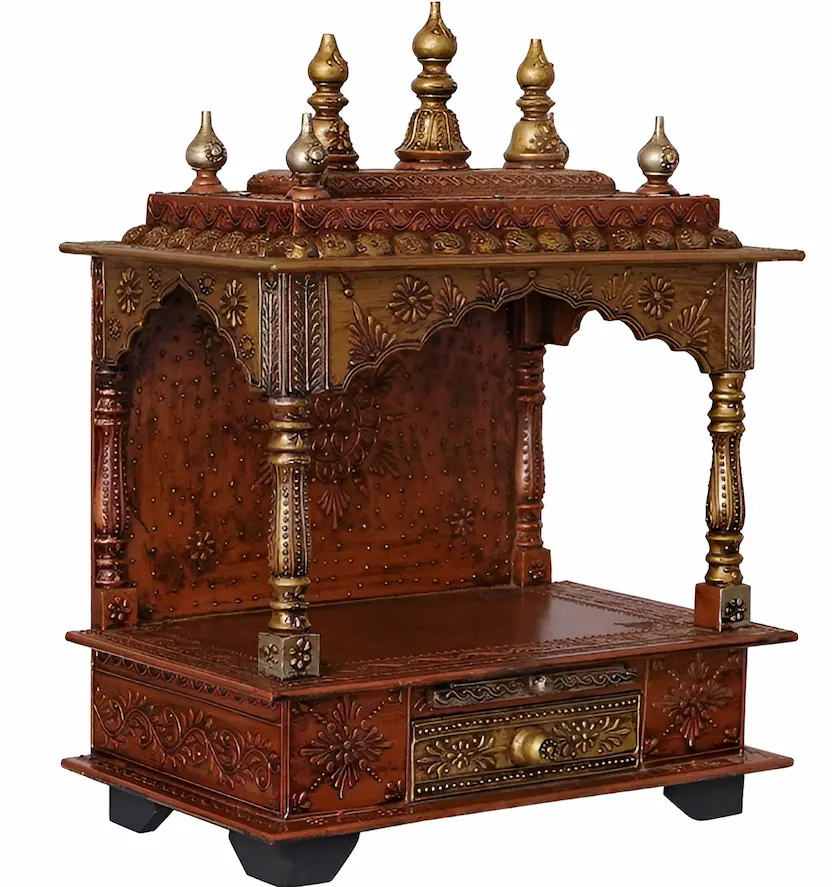






Vastu for Temple in Home or Office: Vastu Secrets You Should Know
Why Every Indian Home and Office Needs a Temple
In Indian culture, spirituality is not just a belief, it is a way of life. Every home and workplace is a sacred space where energies flow and shape our emotions, productivity, and prosperity. This is why Vastu for temple has become a crucial aspect of Indian interior design. A well-placed and energetically balanced temple brings harmony, protection, and spiritual growth to your surroundings.
Core Vastu Essentials for Temple Placement
| Aspect | Recommended Practice | Purpose |
|---|---|---|
| Direction | Prefer North-East (Ishan) corner; keep uncluttered and serene. | Aligns with positive energy flow and clarity. |
| Elevation | Place on a clean, raised platform—never directly on the floor. | Signifies respect and maintains purity. |
| Materials | Use natural woods or stone; avoid synthetic glare-heavy finishes. | Supports grounding and calm ambience. |
| Lighting | Soft, warm lighting; ensure adequate ventilation. | Encourages focus and peaceful meditation. |
| Workplace Harmony | Keep the temple away from direct workstation clutter. | Prevents distraction and preserves sanctity. |
Accessibility and Care
Ensure the temple area is accessible, clean, and safe for all family members and colleagues. Use clear pathways, stable platforms, and adequate lighting to support daily practice without strain.
The Importance of Having a Temple at Home or Office
Many people overlook the need for a spiritual corner in their homes or offices. However, according to ancient Indian wisdom, placing a temple based on Vastu principles can positively influence mental peace, relationships, and even financial stability.
Having a temple at home helps build a personal connection with divinity, reduces stress, and provides a sense of grounding. In the workplace, a Vastu-compliant temple can boost focus, reduce negativity, and create an environment of respect, ethics, and gratitude.
Best Direction to Place a Temple as per Vastu
According to Vastu for temple, the northeast corner, also known as the Ishaan Kona, is the most auspicious direction for placing your temple. This direction is governed by divine and spiritual energies and aligns with the flow of cosmic vibrations.
If the northeast is not available, the east or north directions can be considered as the next best options. Avoid placing the temple in the south or southwest corners, as these areas are dominated by heavy or stagnant energies.
Temple Placement in Offices as per Vastu
In modern Indian offices, having a small temple or puja corner can bring balance to a high-pressure environment. According to Vastu for temple, the northeast direction is still ideal, even in a commercial setting. If that is not possible, try to create a clean and dedicated space near the reception or inside the owner’s cabin, preferably facing east.
Buy this small temple on Amazon
The presence of a temple helps maintain ethical work culture, invites prosperity, and reduces workplace conflicts. A simple setup with a small idol or sacred symbol, a diya, and a few fresh flowers can be enough to shift the energy positively.
Vastu Guidelines for Temple Placement
Here are some essential Vastu tips for setting up a temple at home or in the office:
- The temple should be placed on the ground floor and not in the basement or above bathrooms and kitchens.
- Avoid placing the temple directly on the floor. Use a clean, elevated wooden or marble platform.
- The idols should be placed a few inches away from the wall to allow airflow and energy circulation.
- Never place the temple under a staircase or in cluttered storage areas.
- Do not store unnecessary items or money in the temple space.
- Make sure the office temple space is clutter-free and not used for storing files or electronics.
Best Colors for Temple as per Vastu
Colors influence mood and energy. According to Vastu for temple, the most recommended colors for your puja room or temple space are:
- White – Represents purity, peace, and spiritual clarity.
- Light yellow – Attracts positivity and divine blessings.
- Light pink or pastel shades – Promote calmness and compassion.
- Avoid dark colors like black, dark grey, or deep red as they can disturb the spiritual vibrations of the space.
- Wooden colors are best as they connect to the earth energy.
What to Use for Decorating the Temple
Decorating the temple with sacred items can enhance its energy. Here are some traditional and Vastu-compliant items you can use:
- Brass or copper diyas to attract prosperity and purify energy
- Akhand diya (can also be used for daily use) – Buy on Amazon
- Fresh flowers and garlands to bring life and fragrance
- Rangoli or sacred symbols like Om and Swastik on the floor or walls
- Om sticker for Mandir décor – Buy on Amazon
- Small bells or conch shells for sound cleansing
- Buy Upan bell here – Buy on Amazon
- Framed images or idols of deities made of marble, wood, or metal
- Incense sticks and dhoop to keep the atmosphere calm and fragrant
- Buy dhoop cones – Buy on Amazon
- Crystals, Vypar vridhi yantras or pyramid yantras for enhancing spiritual focus
- Get here Vypar Vridhi Yantra – Buy on Amazon
Why a Special Space for Temple is Essential
A temple should not be an afterthought or an adjustable corner. It deserves a dedicated, clean, and serene space. By giving your temple a defined place, you respect divine energies and invite blessings into your life.
When the temple is treated with importance, it becomes a powerful energy center. It absorbs negative vibrations and radiates positive energy throughout your home or office. It serves as a reminder of your spiritual values and strengthens your mental and emotional well-being.
Conclusion
Incorporating a temple based on Vastu for temple principles is one of the most powerful ways to invite peace, clarity, and abundance into your living or working space. It is not just a physical space but a spiritual energy center that influences your life deeply.
A well-designed temple, placed with care, not only beautifies your home but also aligns you with higher energies (Read more here) . So give your home or office the sacred center it deserves and let divine energy flow freely.
FAQs — Frequently Asked Questions
Can we place the temple in the bedroom?
Avoid placing the temple in the bedroom. If you live in a one-room studio apartment, use the North East corner and ensure it is properly covered with a curtain and not directly facing the bed.
Is it okay to have more than one idol of the same deity?
Vastu advises against keeping multiple idols of the same deity. One idol or image per deity is enough to maintain spiritual focus.
What is the ideal height for placing the idols?
Idols should be placed at chest or eye level—never too high or too low. They should always be placed facing east or west.
Can a temple be placed in the kitchen?
It is best to avoid the kitchen. However, if space is limited, you can dedicate a small northeast corner of a vegetarian kitchen with proper separation and cleanliness.
How to maintain the energy of the temple?
Clean the temple daily, light a diya/incense stick/dhoop, offer fresh flowers, and chant or play devotional music and mantras to maintain positive energy.
Can I keep the temple near a bar?
Maintain the sanctity by not placing the temple near the bar or dining area where non-vegetarian food is served.
Is it necessary to perform daily puja in the office temple?
While daily puja is ideal, even a simple daily act like lighting a diya/dhoop or offering flowers can maintain the positive vibration. Playing soft devotional music or chanting for a few minutes can also uplift the environment.