Pitru Paksha is a sacred period dedicated to honouring ancestors (Photo Credit-Kaulesh Verma)
Introduction
Why Do People Avoid Non-Vegetarian Food in Pitru Paksha? – Pitru Paksha, also known as Shraddha Paksha, is a sacred 16-day period in the Hindu lunar calendar dedicated to paying homage to ancestors. Families perform rituals like Shraddha and Tarpan to express gratitude, seek blessings, and ensure peace for the departed souls.
One of the most important disciplines observed during Pitru Paksha is avoiding non-vegetarian food, alcohol, and indulgent meals. Instead, families follow a sattvic (pure and light) vegetarian diet. But why is this practice considered so essential? The answer lies in spirituality, health, Vedic principles, and even stories from the Puranas.
What Do the Scriptures Say?
1. The Concept of Sattva, Rajas, and Tamas
According to the Bhagavad Gita and ancient Ayurvedic texts, food influences the state of mind:
- Sattvic food: Pure, light, and vegetarian. Promotes calmness, clarity, and devotion.
- Rajasic food: Spicy, oily, or indulgent. Increases restlessness and desires.
- Tamasic food: Heavy, stale, or non-vegetarian. Promotes lethargy, aggression, and negativity.
During Pitru Paksha, a sattvic diet is prescribed to maintain purity in thought, body, and environment while invoking ancestors.
2. The Garuda Purana’s Instruction
The Garuda Purana clearly states that offerings made with devotion, simplicity, and sattvic food reach the ancestors and bring blessings. Tamasic food, including meat and alcohol, is believed to block the sanctity of these offerings.
Verse from the Garuda Purana
The Garuda Purana emphasizes that Shraddha should only include sattvic food like rice, sesame, barley, and water.
Sanskrit:
तिलोदकं च पिण्डाश्च कुशाः शुद्धाः समाहिताः ।
एतत् पितृपूजायाम् आहारेषु प्रशस्यते ॥
Translation:
“Sesame water, food balls (pindas), and pure kusa grass are the proper offerings for Pitru worship. These are praised as suitable foods in Shraddha.”
This shows that only sattvic, vegetarian offerings nourish the ancestors. Non-vegetarian food is considered impure and therefore rejected.
3. The Manusmriti’s View
The Manusmriti also emphasizes simplicity and purity in rituals dedicated to ancestors. It discourages indulgence and stresses humility while performing Shraddha.
4. Verse from the Mahabharata (Karna’s Story)
The Mahabharata (Anushasana Parva, Section 90) describes Karna’s suffering in the afterlife.
Sanskrit:
सुवर्णं भूमिम् अलंकारान् दत्त्वा न तु पितृभ्यः अन्नम् ।
तस्मात् तत्र नाश्नाति कर्णः स्वर्गेऽपि दुर्लभम् ॥
Translation:
“Karna gave away gold, land, and ornaments in charity, but never food to his ancestors. Therefore, even in heaven, food was denied to him.”
This verse highlights why food is central in Shraddha, and why purity in offerings is essential.
Puranic Stories Explaining the Practice
Story of Karna in the Mahabharata
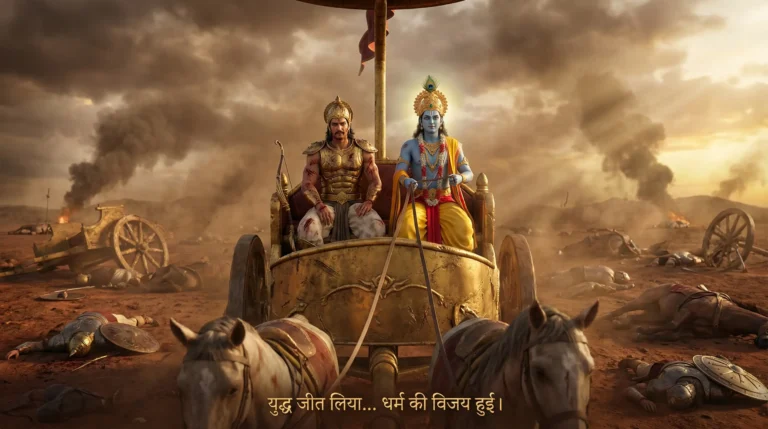
As mentioned above, one of the most well-known stories comes from the Mahabharata. When Karna, the great warrior, died and reached heaven, he was offered gold and jewels instead of food. Surprised, he asked why he was not being given proper meals.
The deities told him, “Throughout your life, you donated gold and wealth, but never food.” Realizing this, Karna prayed to return to earth during Pitru Paksha to offer food to the needy and his ancestors.
This story highlights why simple vegetarian food offerings during Pitru Paksha are considered essential. Food is believed to nourish the soul and strengthen the bond between the living and the departed.
The Tale of Sage Agastya
In another story from the Padma Purana, Sage Agastya emphasizes that only sattvic offerings can reach ancestors. Once, a king attempted to offer luxurious meals including meat. But his Shraddha rituals failed to yield blessings. Sage Agastya explained that only food prepared with purity, simplicity, and devotion is accepted by the pitrs (ancestors). This story links the practice of abstinence with the principle of ahimsa (non-violence).
King Nimi in the Vayu Purana
In the Vayu Purana, King Nimi performed Shraddha with devotion. Priests suggested offering meat, but divine voices intervened:
Paraphrased verse:
“The Pitrs are sustained by purity, not indulgence. Only sattvic food offerings reach them.”
This confirms that Shraddha is about purity, not luxury.
Symbolism of Sattvic Food
Every item in Shraddha has symbolic meaning:
- Rice (anna): Stability and nourishment.
- Sesame seeds (til): Protection and removal of obstacles.
- Milk and ghee: Purity and light.
- Fruits: Vitality and freshness.
Such sattvic foods symbolize blessings. Non-vegetarian food, linked with indulgence and violence, does not carry such symbolism.
The Symbolism of Crows
In many rituals of Pitru Paksha, offerings are first placed outside for crows. According to Puranic belief, crows are considered messengers of ancestors. If the crow accepts the offering, it is seen as a sign that the ancestors are satisfied. Non-vegetarian food is never offered, as it disrupts the sanctity of this symbolic connection.
Spiritual Reasons for Avoiding Non-Vegetarian Food
- Purity of Atmosphere
Shraddha rituals require a peaceful and respectful environment. Vegetarian food is sattvic and helps maintain calmness. - Respect for Ancestors
The offerings made are always vegetarian, simple, and humble. Eating or cooking non-vegetarian food during this time is seen as disrespectful to the departed souls. - Maintaining Discipline
Pitru Paksha is a time of self-control, humility, and gratitude. Avoiding indulgence in rich or non-vegetarian food reflects discipline.
Cultural and Health Perspectives
Seasonal Health Benefits
Pitru Paksha usually falls during the monsoon-autumn transition, when digestion is naturally weak. Vegetarian foods like rice, dal, vegetables, and fruits are easier to digest and keep the body light.
Cultural Continuity
Abstaining from non-vegetarian food during this period is also a family tradition passed down for generations. It unites families in practicing respect, gratitude, and restraint.
Regional Practices of Shraddha Meals
Though the essence of Pitru Paksha is universal, food offerings vary slightly across India.
Gaya (Bihar)
- Known as the most sacred place for Shraddha.
- Offerings include pinda made with rice, til (sesame seeds), and barley flour.
- Meals are simple and free of onion, garlic, and spices.
Prayagraj (Uttar Pradesh)
- Shraddha is performed on the banks of the Triveni Sangam.
- Offerings include khichdi, puri, and kheer.
- Food is first shared with cows and crows.
Bengal
- Shraddha rituals are closely linked with Mahalaya Amavasya before Durga Puja.
- Offerings include rice, bananas, milk, and sweets.
- Families avoid rich or spicy meals during this period.
Maharashtra
- Vegetarian offerings include rice, dal, vegetables, and sometimes puran poli.
- Tamarind, brinjal, and all meat are strictly avoided.
South India
- Shraddha rituals are called Pitru Tarpanam.
- Offerings are served on banana leaves.
- Dishes include curd rice, boiled vegetables, and payasam.
- Coconut and jaggery are widely used as symbols of purity.
Despite regional variations, all practices maintain the same principle: offerings should be simple, sattvic, and prepared with devotion.
Why Non-Vegetarian Food is Discouraged: A Summary
- It is tamasic and disrupts spiritual vibrations.
- It contradicts the sanctity of offerings made to ancestors.
- It goes against the discipline and humility expected in this period.
- Scriptures and Puranas explicitly instruct avoiding it.
- Regional customs across India consistently follow this practice.
Lessons from Abstinence
By avoiding non-vegetarian food during Pitru Paksha, devotees practice:
- Discipline – Restraining the senses and desires.
- Humility – Expressing gratitude with simplicity.
- Respect – Honoring scriptural traditions.
- Spiritual Clarity – Creating an environment suitable for rituals.
Pitru Paksha is more than a ritual, it is a period of remembrance, gratitude, and discipline. Avoiding non-vegetarian food during these days is not merely a restriction but a spiritual practice rooted in respect for ancestors.
By following a sattvic diet, families create a pure atmosphere where prayers and offerings can reach their forefathers. Stories from the Puranas, like that of Karna, remind us that food offered with devotion carries eternal value.
In essence, abstinence during Pitru Paksha is an expression of humility, purity, and love for those who came before us.
Frequently Asked Questions:
Can we eat onions and garlic during Pitru Paksha?
Traditionally, onions and garlic are avoided as they are considered tamasic and rajasic foods. Families prefer simple meals.
Is it compulsory to avoid non-vegetarian food in Pitru Paksha?
It is not enforced by law, but scriptures and traditions strongly recommend it to maintain ritual purity.
What food is offered to ancestors during Shraddha?
Rice, dal, vegetables, kheer, fruits, and water are common. These sattvic offerings are believed to reach ancestors through divine mediums.
What happens if someone eats non-vegetarian food during Pitru Paksha?
It is believed that the sanctity of rituals is reduced and blessings may not reach fully. Elders often advise against it.
Is fasting necessary in Pitru Paksha?
Fasting is not compulsory. Most people prefer light vegetarian meals and avoid indulgence.
Which scriptures mention food rules for Pitru Paksha?
The Garuda Purana, Mahabharata (Anushasana Parva), Vayu Purana, and Matsya Purana describe Shraddha rituals and the importance of sattvic food.
Also read – Pitru Paksha 2025: Honouring Our Ancestors Through Rituals, Stories and Traditions
Stay informed with the latest news and updates – only on Rapido Updates.
About the Author