Discover the profound spiritual significance of Guru Purnima, a sacred festival that honors the guiding light of gurus
The Eternal Flame: What Is Guru Purnima?
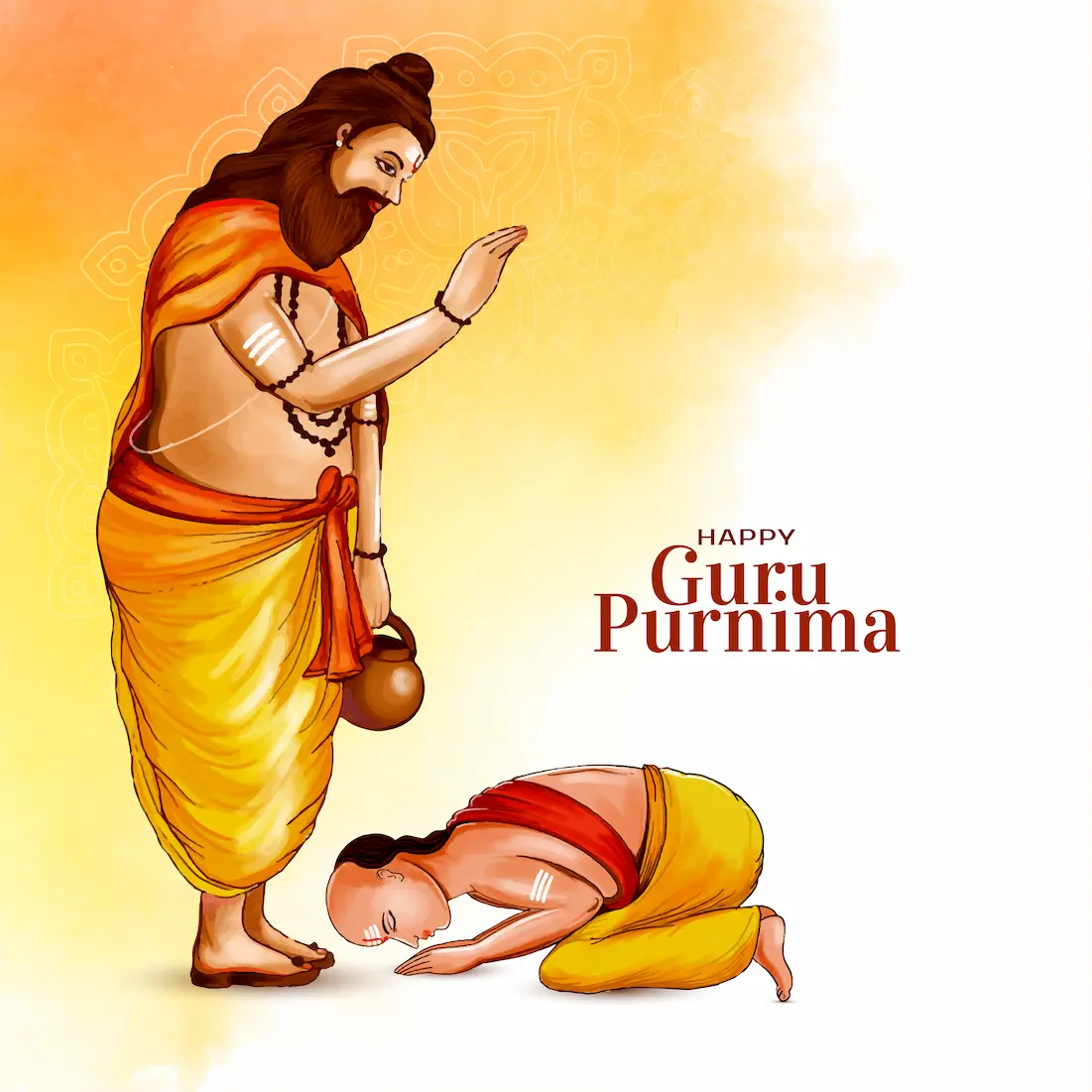
Guru Purnima, also known as Vyasa Purnima, is a revered spiritual festival celebrated on the full moon day (Purnima) in the Hindu month of Ashadha (June – July). The word Guru is derived from the Sanskrit roots Gu (darkness) and Ru (remover), meaning “the one who dispels darkness.” This day is dedicated to honouring the gurus – spiritual and academic – who illuminate our path with wisdom and compassion.
The festival transcends religious boundaries. In Hinduism, it commemorates the birth of Sage Vyasa, the legendary author of the Mahabharata and compiler of the Vedas. In Buddhism, it marks the day when Lord Buddha delivered his first sermon at Sarnath, setting the Wheel of Dharma in motion. Jains also observe this day to honor their spiritual teachers. Guru Purnima is not merely a ritualistic observance – it is a spiritual homecoming. It reminds us that no matter how far we drift, the guru’s grace is a lighthouse guiding us back to our true self.
Historical Context of Guru Purnima: From Adiyogi to Vyasa
Guru Purnima traces its origins to over 15,000 years ago, when the first yogi, Adiyogi Shiva transformed into the Adi Guru (first guru) on the full moon of Dakshinayana, the southern solstice. On this day, he began imparting the science of yoga to the Saptarishis (seven sages), marking the beginning of the guru-shishya tradition.
Later, this day became known as Vyasa Purnima, commemorating the birth of Sage Veda Vyasa, the compiler of the Vedas and author of the Mahabharata. His monumental contribution to spiritual literature earned him the title of the Guru of all Gurus.
In Buddhism, Guru Purnima marks the day Gautama Buddha delivered his first sermon at Sarnath, setting the Wheel of Dharma in motion. For Jains, it honors Mahavira’s disciple Indrabhuti Gautam, who attained enlightenment on this day.
The Sacred Bond: Significance of Guru Purnima
The guru is not just a teacher; they are a bridge between the finite and the infinite. In the Guru Gita, it is said:
“Gurur Brahma Gurur Vishnu Gurur Devo Maheshwara,
Guru Sakshat Parabrahma Tasmai Shri Gurave Namaha.”
गुरुर ब्रह्मा गुरुर विष्णु गुरुर देवो महेश्वर,
गुरु साक्षात परब्रह्म तस्मै श्री गुरवे नमः
गुरु ही ब्रह्मा हैं, गुरु ही विष्णु हैं, गुरु ही देवता महेश्वर हैं; गुरु परब्रह्म के समान हैं, ऐसे गुरु को मेरा नमस्कार।
This verse equates the guru with the trinity of Hindu gods – Brahma (creator), Vishnu (preserver), and Shiva (destroyer) and ultimately with the Supreme Being. Such is the reverence accorded to the guru in Indian spiritual traditions.
Guru Purnima is a day to express gratitude for this divine presence in our lives. It is believed that the blessings of a guru can burn away lifetimes of karma and awaken the dormant potential within a disciple. The guru doesn’t just teach; they transform.
In today’s fast-paced, hyper-connected world, the significance of Guru Purnima is even more profound. It invites us to pause, reflect, and reconnect with the timeless wisdom that anchors us amidst chaos. Whether your guru is a spiritual master, a parent, a teacher, or even life itself – this day is a chance to bow in humility and reverence.
Unique Customs and Traditions Across India
Guru Purnima is observed with deep reverence and regional diversity. Here are some distinctive customs:
- Charan Puja (Worship of the Guru’s Feet): Disciples wash the feet of their gurus, symbolizing surrender and gratitude. The charanamrit (sacred water) is then distributed as a blessing.
- Guru Gaddi Celebrations: In many ashrams, the Guru Gaddi (spiritual seat) is decorated, and devotees gather for bhajans, kirtans, and havans (fire rituals).
- Academic Homage: In modern India, students honor their teachers with flowers, speeches, and cultural programs, bridging spiritual reverence with scholastic gratitude.
- Seva and Satsang: Acts of selfless service (seva) and spiritual discourses (satsang) are common, especially in spiritual communities.
- Chanting and Scriptural Recitation – Recite sacred texts like the Guru Gita, Bhagavad Gita, or teachings of your spiritual lineage. Chanting mantras such as “Om Gurave Namah” helps attune your mind to the guru’s frequency.
- Meditation and Introspection – Spend time in silence and meditation. Reflect on the teachings you’ve received and how they’ve shaped your journey. This is a powerful time for inner alignment and spiritual renewal.
Initiation Ceremonies: Many spiritual seekers choose this day to begin new disciplines like yoga, mantra chanting, or meditation, believing the guru’s grace amplifies their efforts.
Guru Purnima is not just a date on the calendar, it’s a call to awaken. It reminds us that while knowledge may be abundant, wisdom is rare, and the guru is the one who helps us bridge that gap. In honoring the guru, we honour the divine spark within ourselves.
So this Guru Purnima, light a lamp not just in your home, but in your heart. Let the flame of gratitude, devotion, and self-realization burn bright.
FAQ: Frequently Asked Questions
Why is Guru Purnima celebrated?
Guru Purnima is celebrated to honour and express gratitude to spiritual and academic teachers who guide us from ignorance to enlightenment. It commemorates the birth of Sage Vyasa, the author of the Mahabharata and compiler of the Vedas, and is observed by Hindus, Buddhists, and Jains alike.
What is the spiritual significance of Guru Purnima?
Spiritually, the guru is seen as a divine channel who helps the seeker realize their true self. Guru Purnima is a day to reflect on the teachings received, seek blessings, and renew one’s commitment to the spiritual path.
How is Guru Purnima observed in different traditions?
In Hinduism, devotees perform Guru Puja and recite scriptures like the Guru Gita. Buddhists mark the day as the occasion when Lord Buddha gave his first sermon. Jains honour their spiritual leaders with prayers and discourses. Across traditions, the essence remains the same, reverence for the guru.
Can someone without a spiritual guru still celebrate Guru Purnima?
Absolutely. Guru Purnima is also a time to honour anyone who has played the role of a guide, parents, teachers, mentors, or even life experiences. It’s a celebration of wisdom, growth, and gratitude.
What are some meaningful activities to do on Guru Purnima?
You can observe silence and meditate, offer prayers, read spiritual texts, engage in acts of service, or begin a new spiritual practice. Even writing a letter of gratitude to your mentor can be a powerful gesture.
Also Read – Stay updated with the latest news on Rapido Updates. Keep yourself updated with The World, India News, Entertainment, Market, Gadgets, Sports, and many more
Read – Shayan Ekadashi & Chaaturmaas: Embracing Divine Rest and Spiritual Awakening
About the Author