
Why Ravan’s Ten Heads Reveal Spiritual Wisdom
Published by: Manjusha Sinha
Published on:
Updated on:
Introduction
How Ten Heads of Ravan Reflect Spiritual Wisdom? Among the many characters in Hindu mythology, Ravan or Ravana remains one of the most complex. Known as the ten-headed king of Lanka in the epic Ramayana, Ravan is often portrayed as the ultimate villain who kidnapped Sita and was later defeated by Lord Ram. Yet, he was also a great scholar, a devotee of Lord Shiva, and a ruler of immense wisdom.
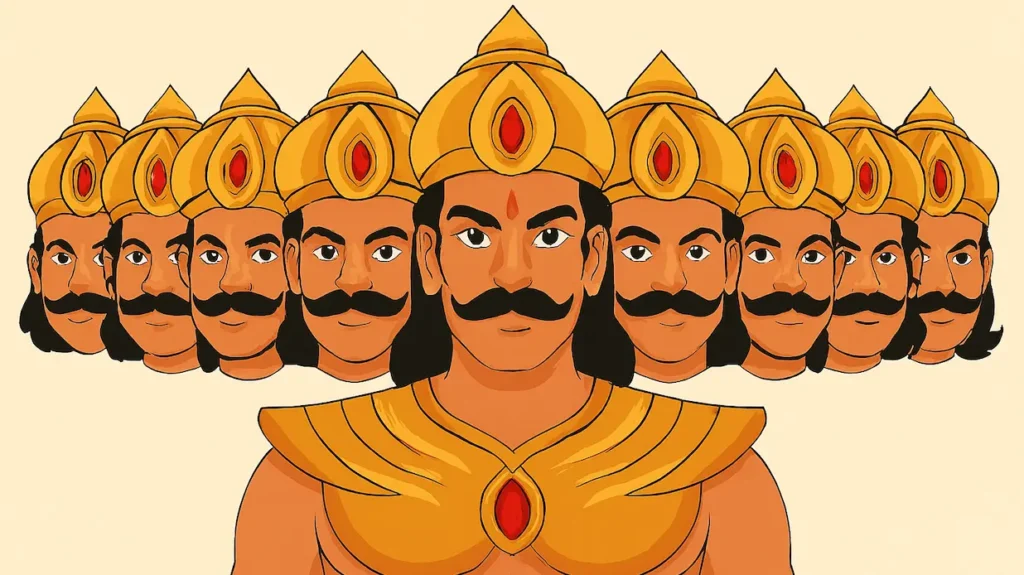
The most striking feature about Ravan is his ten heads, which make him a unique figure in world mythology. But why does Ravan have 10 heads? Did he actually have 10 physical heads, or do they symbolize deeper meanings about human nature and the balance of virtues and vices?
This blog explores every aspect of this question: mythological stories, symbolic interpretations, spiritual lessons, and how modern life can take inspiration from the tale of Ravan’s ten heads.
Mythological Background of Ravan’s 10 Heads
- Literal Interpretation: Some texts and artistic depictions show Ravan with 10 actual heads, symbolizing his superhuman and terrifying form.
- Metaphorical Interpretation: Many scholars and spiritual teachers believe the 10 heads symbolize qualities, emotions, or knowledge. They were not physical but represent the mental and spiritual dimensions of Ravan.
- Puranic Story: According to some Puranas, Ravan performed severe penance to Lord Shiva. To prove his devotion, he cut off his own head 10 times. Each time, Shiva restored his head, blessing him with immense power and knowledge.
Thus, his 10 heads are both divine gifts and symbolic warnings of what happens when wisdom is overpowered by arrogance.
Symbolism of 10 Heads
1. Ten Human Emotions< of Ravan/h3>
- Kama (Lust)
- Krodha (Anger)
- Moha (Delusion)
- Lobha (Greed)
- Mada (Pride)
- Matsarya (Envy/Jealousy)
- Manas (Mind)
- Buddhi (Intellect)
- Chitta (Will)
- Ahamkara (Ego)
These emotions are natural, but when uncontrolled, they lead to downfall—exactly what happened to Ravan.
2. Ten Qualities of Knowledge
Another interpretation says 10 heads of ravan symbolize the six Shastras (scriptures) and four Vedas, showing that he was a master of vast knowledge. This highlights his scholarly side rather than his demonic side.
3. The Balance of Good and Evil
The 10 heads of Ravan can also be seen as a balance between virtues and vices. While Ravan was wise and strong, his arrogance, lust, and ego caused his destruction. His heads thus serve as a reminder that knowledge without humility leads to ruin.
Historical and Cultural Interpretations
- North India: Ravan’s 10 heads are often shown as symbolic masks during Ravan Dahan on Dussehra, representing the victory of good over evil.
- South India: Some traditions see Ravan as a more tragic hero, a brilliant man destroyed by his weaknesses.
- Sri Lanka: Ravan is still remembered as a powerful ruler, and some even consider him a historical king rather than a purely mythological demon.
Facts and Figures about Ravan’s Ten Heads
- Height: Some texts describe him as over 20 feet tall.
- Titles: Dashagriva or Dashanana, meaning “one with ten heads.”
- Musical Genius: Each head could sing different ragas.
- Scholarship: Credited with knowledge of Ayurveda and astrology; author of Ravan Samhita.
- Festival Symbolism: Effigies of Ravan with 10 heads are burned during Dussehra, each head representing a vice.
The Spiritual Lessons from Ravan’s 10 Heads
- Control Over Desires: Excessive desire, pride, or anger leads to downfall.
- Wisdom Requires Humility: Knowledge must be balanced with humility and dharma.
- Every Human Has “Ten Heads”: We all struggle with multiple emotions and desires.
- Duality of Nature: Even the most learned can fall prey to ego.
Modern Relevance of Ravan’s 10 Heads
In today’s fast-paced, competitive world, Ravan’s story remains highly relevant. Each of his heads can be seen as representing modern-day struggles:
- Lust: Obsession with material pleasures.
- Anger: Road rage, workplace stress.
- Greed: Endless desire for money and status.
- Pride: Arrogance in social and professional life.
- Jealousy: Comparison culture on social media.
By reflecting on Ravan’s downfall, we learn the importance of self-control, mindfulness, and spiritual grounding in modern times.
Conclusion
The question “Why does Ravan have 10 heads?” goes far beyond mythology. His 10 heads are not just about physical appearance but about the complexity of human nature, our strengths, weaknesses, knowledge, and desires.
Ravan was not a one-dimensional villain; he was a brilliant king, a Shiva devotee, and a scholar who let his ego and desires overshadow his wisdom. His downfall teaches us the timeless lesson that without humility and self-control, even the greatest power is meaningless.
As we celebrate festivals like Dussehra and see Ravan’s effigies burn, we must remember that the real battle is within us – the battle to conquer the “ten heads” of negativity and rise towards balance, wisdom, and dharma.