
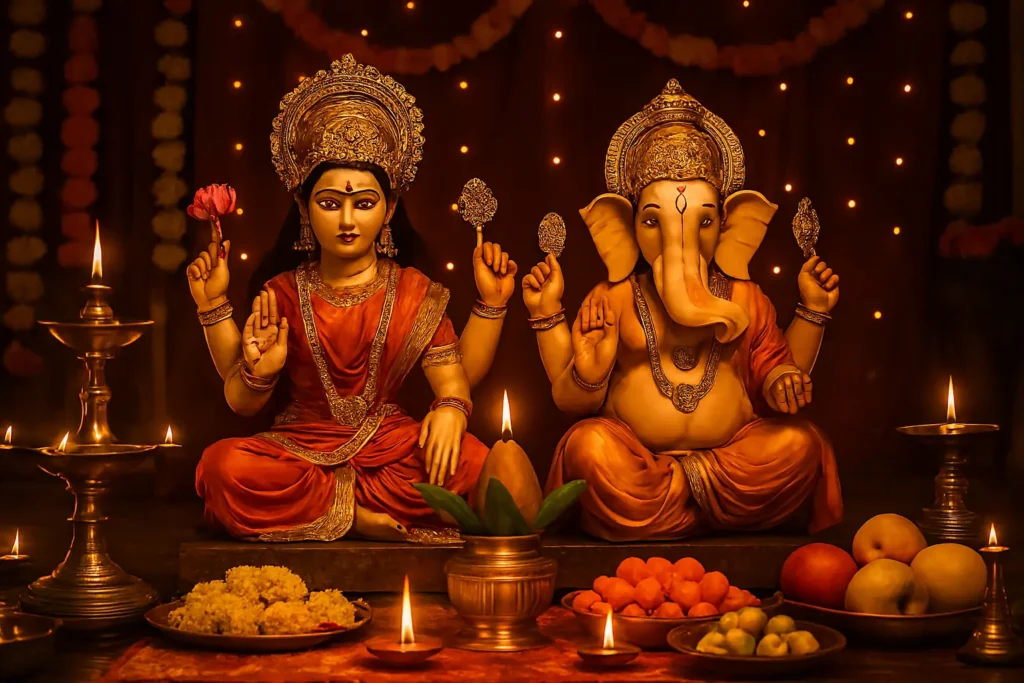
How to Do Diwali Puja 2025: Step-by-Step Guide for Home
Wondering how to do Diwali Puja 2025 at home the right way? This blog explains the process in a very simple way so that anyone, even if doing it for the first time, can follow along confidently.
Why Diwali Puja Matters
Diwali is not just a festival of lights. It is the time when families across India come together to honour Goddess Lakshmi, the bringer of wealth and prosperity, and Lord Ganesha, the remover of obstacles. Worshipping Lord Vishnu ensures balance and harmony.
According to the Vishnu Purana, during the cosmic churning of the ocean (Samudra Manthan), Goddess Lakshmi emerged and chose Lord Vishnu as her eternal companion. This shows that wherever there is prosperity, there must also be righteousness.
1. When Is Diwali in 2025?
In 2025, Diwali will be celebrated on Monday, October 20th. The main Lakshmi Puja is performed during the Pradosh Kaal.
Lakshmi Puja Muhurat: 07:08 PM to 08:18 PM (check your local Panchang for accuracy).
2. Why Diwali Puja Is Important
Diwali Puja invites prosperity, good luck, and divine blessings. Goddess Lakshmi visits homes that are clean and filled with devotion. Lord Vishnu ensures that wealth is used righteously and remains protected.
3. Preparations Before Diwali Puja
3.1 Clean and Purify the Home
- Clean every room, including the puja space.
- Remove clutter, broken items, and cobwebs.
- Decorate with rangoli, torans, and floating candles.
- Wear clean or new clothes for the puja.
3.2 Gather the Puja Samagri
| Item | Use |
|---|---|
| Idol/photo of Goddess Lakshmi | For wealth and prosperity |
| Lord Ganesha & Vishnu idols/photos | For wisdom and protection |
| Kalash, mango leaves, coconut | Symbol of abundance |
| Flowers, Panchamrit, incense | Offerings and sanctity |
| Ghee, diyas, sweets, coins | For aarti and blessings |
3.3 Prepare the Puja Altar
- Use a red/yellow cloth on a wooden platform.
- Place idols/photos of Lakshmi, Ganesha, and Vishnu.
- Decorate with flowers, lights, and rangoli.
4. How to Do Diwali Puja 2025 (Step-by-Step)
- Set the Intention: Calm your mind and invite the deities.
- Purify the Space: Sprinkle Ganga jal and light incense.
- Invoke Lord Ganesha: Offer kumkum, turmeric, and chant “Om Gan Ganapataye Namah.”
- Worship Lakshmi & Ganpati: Offer flowers, coins, and chant “Om Shreem Hreem Kleem Maha Lakshmi Namaha.”
- Worship Vishnu & Lakshmi: Offer diya, sweets, and incense.
- Worship Currency & Pen: Symbolizing wealth and wisdom.
- Offerings & Aarti: Perform aarti, chant Hanuman Chalisa, and sing Lakshmi Aarti.
- Distribute Prasad: Light diyas in all corners and share sweets.
5. Extra Tips for a Peaceful Puja
- Begin the puja at the right muhurat for your city.
- Make small footsteps entering your home entrance using roli (symbolizes Maa Lakshmi visiting your home).
- If possible, also keep and worship an owl (Lakshmi’s vahan) and a rat (Ganesha’s vahan).
- Offer lotus or rose flowers and rose ittar (perfume) to Maa Lakshmi.
- Offer garlands to all the deities.
- Place betel leaves with clove and cardamom as offerings.
- Avoid leaving the puja midway. Stay present and calm.
- Keep mobile phones and distractions aside.
- Chant mantras sincerely, even if softly.
- Let diyas extinguish naturally—do not blow them out.
- Share sweets, light green crackers responsibly, and maintain peace.
6. Common Mistakes to Avoid During Diwali Puja
- Not cleaning the altar or puja space properly.
- Missing the muhurat or rushing through the rituals.
- Forgetting to light a diya in every corner of the home.
- Using candles instead of traditional oil lamps.
- Keeping coins and money scattered instead of placing them neatly near the idol.
- Not cleaning up cracker residue the next day.
7. Simple Mantras for Diwali 2025
- For Ganesha: Om Gan Ganapataye Namah
- For Lakshmi: Om Shreem Maha Lakshmyai Namah
- For Vishnu: Chant Vishnu Sahastranam
Even repeating them softly brings peace and good energy.
8. Conclusion
Performing Diwali Puja 2025 with devotion, cleanliness, and faith invites abundance into your life. The lamps you light are not just for decoration—they represent the light within you.
When you perform the rituals mindfully, you connect to divine energy that removes negativity and fills your home with prosperity.
So this Diwali, gather your family, light your diyas, and celebrate with love and gratitude.
May Goddess Lakshmi and Lord Ganesha bless your home with health, wealth, and happiness.
Have you tried doing Diwali Puja this way before? Share your experience or questions in the comments below.
🪔 Frequently Asked Questions (FAQ)
Q1: What is the correct time for Diwali Puja 2025?
The most auspicious time is during Pradosh Kaal (around 7 PM to 8:30 PM) on October 20, 2025. Always check your local muhurat.
Q2: What do you need for Diwali Puja?
You need idols of Goddess Lakshmi-Ganesha, Lakshmi-Vishnu, a Kalash, flowers, rice, diyas, incense, sweets, fruits, and coins.
Q3: Can I do Diwali Puja alone?
Yes, you can perform the puja alone with devotion. It is your intention and faith that matter most.
Q4: Is Lakshmi Puja and Diwali Puja the same?
Yes, the main Diwali evening is also known as Lakshmi Puja, when the Goddess of wealth is worshipped.
Q5: Can I use LED lights instead of diyas?
You can use LED lights for decoration, but try to light at least one traditional diya with oil or ghee for auspiciousness.
Q6: Why is Lord Vishnu worshipped with Goddess Lakshmi on Diwali?
Most people associate Diwali and Lakshmi Puja only with Goddess Lakshmi, the goddess of wealth and abundance. But if you notice carefully, the rituals also involve the worship of Lord Vishnu, her divine consort. This combination has deep spiritual and symbolic meaning.
- A Kitchen Filled with Diwali Magic
- Morning Rituals & Manifestation
- Ahoi Ashtami 2025 – Ammaji’s Courtyard
- Ravan Worship in India
- Kartik Month – Significance in Hinduism
- Sharad Purnima 2025
- When Festivals Bring More Stress Than Joy
- Why Card Parties Are the Heart of Diwali
- Karva Chauth 2025
- Hindu Festivals in October 2025
- Ram vs Ravan – Leadership & Dharma Lessons
- Shurpanakha in the Ramayana