
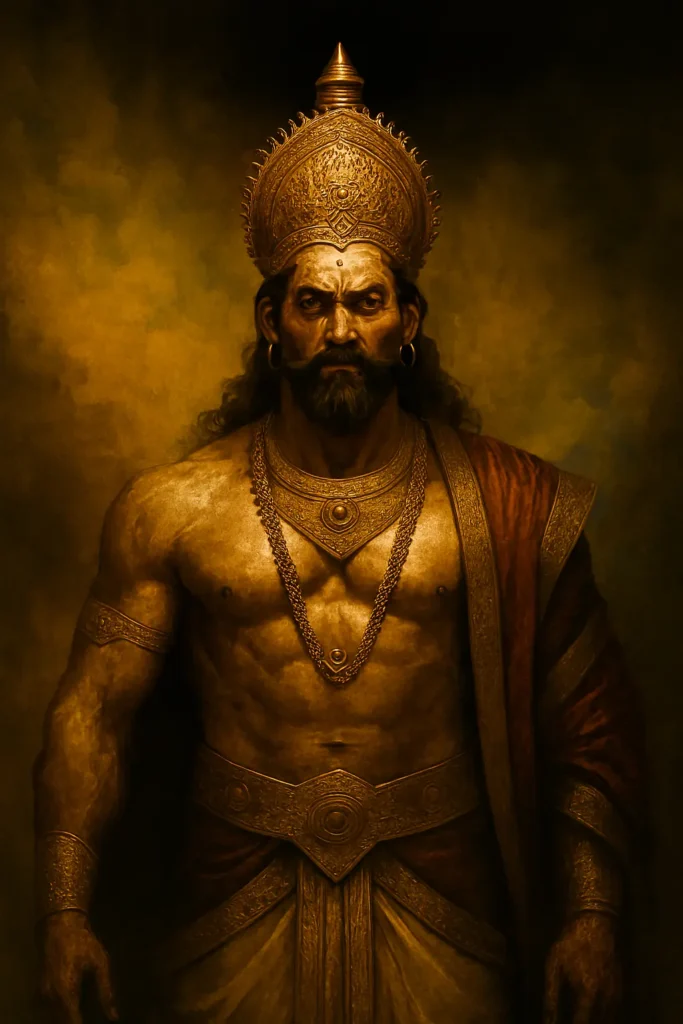
Why Ravan Is Worshipped in Some Parts of India
| Forge Your Best Self
When we think of Ravan, the demon king of Lanka, the first image that comes to mind is his fiery effigy burning on Dussehra, symbolizing the triumph of good (Ram) over evil (Ravan). Yet, in some regions of India and beyond, people worship Ravan instead of condemning him.
Ravan was not only the antagonist of the Ramayana. He was also a great scholar, a devoted Shiva bhakt, and a capable ruler. His life reflects the duality of human nature, great virtues alongside destructive flaws.
The Dual Identity of Ravan
- Brahmin by birth – son of Sage Vishrava and Kaikesi
- Master of the Vedas, astrology, and Ayurveda
- Veena player and expert in music
- Composer of the Shiva Tandava Stotram
जटाटवीगलज्जलप्रवाहपावितस्थले
गलेऽवलम्ब्य लम्बितां भुजङ्गतुंगमालिकाम्॥
Translation: “With his matted locks releasing water flows, and a serpent garland hanging around his neck, Lord Shiva dances, sanctifying the world.”
Places Where Ravan Is Worshipped
- Mandsaur, Madhya Pradesh: Worshipped as Mandodari’s husband; pujas during Navratri and Dussehra.
- Bisrakh, Uttar Pradesh: Believed to be his birthplace; honored as ancestor and scholar.
- Kolar, Karnataka: Temples celebrate his devotion to Shiva; verses from Shiva Tandava Stotram are chanted.
- Kangra, Himachal Pradesh: Worshipped during Navratri for protection and blessings.
- Sri Lanka: Revered as a mighty king and protector of Lanka.
Comparison Table: Ravan as Villain vs Worshipped Figure
| Aspect | Ravan as Villain (Ramayana) | Ravan as Worshipped Figure (Local Beliefs) |
|---|---|---|
| Role in Ramayana | Antagonist who abducted Sita | Wise king, devotee, scholar |
| Spiritual Identity | Demon king (Rakshasa) | Devotee of Lord Shiva, composed hymns |
| Leadership | Arrogant, blinded by desire | Just ruler of Lanka, prosperous kingdom |
| Knowledge | Ignored wisdom due to ego | Master of Vedas, astrology, Ayurveda, music |
| Moral Lesson | Ego leads to downfall | Knowledge and devotion are worthy of respect |
| Modern Relevance | Warning against arrogance | Inspiration for scholarship, governance, and devotion |
| Cultural Practice | Effigies burned on Dussehra | Worshipped in Bisrakh, Mandsaur, Kolar, Sri Lanka |
Shlokas Reflecting Ravan’s Wisdom
बिनु सत्संग विवेक न होई।
राम कृपा बिनु सुलभ न सोई॥
Translation: “Without good company, wisdom cannot arise; without Ram’s grace, true knowledge is difficult to attain.”
Lessons from Ravan’s Worship
- Respect Knowledge, But Stay Humble: Expertise must be balanced with humility.
- Devotion Can Coexist with Flaws: Sincere devotion elevates even flawed individuals.
- Family and Roots Matter: Honoring ancestry strengthens community bonds.
- Leadership Must Balance Power and Dharma: Ethical governance is essential.
- See Beyond Black and White: Embrace complexity for deeper wisdom.
Facts and Figures
- Ravan Temples in India: ~30 across Madhya Pradesh, Rajasthan, Karnataka
- Golden Lanka: Described as wealthy, advanced, and well-governed
- Astrology Contribution: Ravan Samhita, a treatise on astrology
- Shiva Tandava Stotram: Composed by Ravan, revered across India
Frequently Asked Questions About Ravan Worship
1. Why is Ravan worshipped in some parts of India?
Ravan is worshipped for his scholarly achievements, devotion to Lord Shiva, and ancestral ties in places like Mandsaur and Bisrakh. His complex character inspires reverence in certain communities.
2. What is the significance of the Shiva Tandava Stotram composed by Ravan?
The Shiva Tandava Stotram is a powerful hymn showcasing Ravan’s deep devotion to Lord Shiva. It is widely recited and respected for its poetic intensity and spiritual depth.
3. Which places in India worship Ravan during Dussehra?
Mandsaur (MP), Bisrakh (UP), Kolar (Karnataka), and Kangra (HP) are known for honoring Ravan during Dussehra with rituals instead of burning effigies.
4. Is Ravan considered a villain or a hero?
In mainstream Ramayana, Ravan is the antagonist. However, in local traditions, he is seen as a wise king, scholar, and devotee, reflecting the duality of human nature.
5. What is the Ravan Samhita?
The Ravan Samhita is an ancient treatise on astrology attributed to Ravan. It contains insights into planetary influences, predictions, and spiritual guidance.
6. Why do people in Bisrakh avoid burning Ravan’s effigy?
Bisrakh villagers believe Ravan was born there and consider him an ancestor. Burning his effigy is seen as disrespectful and potentially harmful to their community’s fortune.
7. What lessons can be learned from Ravan’s life?
Ravan’s life teaches humility, the importance of balancing power with dharma, and the coexistence of devotion and flaws. His downfall was due to unchecked ego despite immense wisdom.
8. Are there temples dedicated to Ravan in India?
Yes, there are around 30 temples across India, especially in Madhya Pradesh, Rajasthan, and Karnataka, where Ravan is worshipped as a scholar and devotee of Shiva.
9. How is Ravan viewed in Sri Lanka?
In Sri Lanka, Ravan is remembered as a strong and wise ruler who protected his land. He symbolizes valor, leadership, and national pride in some cultural narratives.
10. Can devotion coexist with flaws, as seen in Ravan’s story?
Yes, Ravan’s sincere devotion to Shiva despite his flaws shows that spiritual discipline and reverence can elevate a person, even if they struggle with ego or moral failings.