
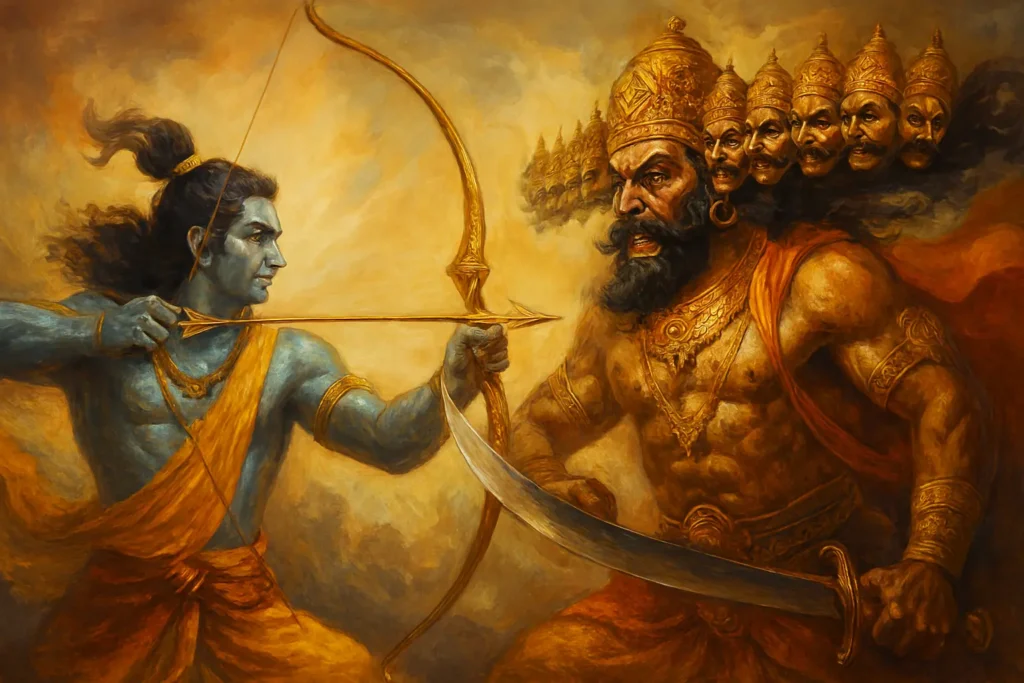
Ram vs Ravan: What the Ramayana Teaches Us About Leadership and Dharma
The Ramayana, one of India’s greatest epics, is more than just the story of the victory of good over evil. It is a treasure of lessons in leadership, dharma (righteousness), and human values. While Lord Ram is remembered as the embodiment of truth, duty, and compassion, Ravan is remembered as a powerful but flawed king. Both were extraordinary leaders, but their approach to dharma and ego shaped their destinies.
Who Was Ram? The Embodiment of Dharma
Lord Ram, the seventh incarnation of Vishnu, is revered as Maryada Purushottam, the ideal man who upheld truth and righteousness in every circumstance. He was known for his compassion, self-control, fairness, and ability to inspire loyalty.
Shloka from Valmiki Ramayana:
देवानाम् च ऋषीणाम् च गुरु: पूज्यतमो हि सः।
राजर्षीणाम् च सर्वेषाम् रामः सत्यप्रतिश्रवः॥Translation: “Among gods and sages, Ram is most revered. Among kings and leaders, Ram is known for his truthfulness and integrity.”
Who Was Ravan? The Knowledgeable but Flawed King
Ravan, the ten-headed king of Lanka, was a brilliant scholar and a devotee of Lord Shiva. He mastered 64 types of knowledge and was well-versed in the Vedas. However, his downfall came from ego, arrogance, and lack of control over desires.
Shloka from Ramcharitmanas:
बिनु सत्संग विवेक न होई।
राम कृपा बिनु सुलभ न सोई॥Translation: “Without good company, wisdom cannot flourish. Without Ram’s grace, true realization is impossible.”
Leadership Styles: Ram vs Ravan
| Aspect | Lord Ram | Ravan |
|---|---|---|
| Core Principle | Dharma (righteousness) | Ego (Ahamkara) |
| Leadership Style | Servant Leadership, compassion | Authoritarian, fear-based |
| Decision-making | Inclusive, dharmic, for the welfare of all | Self-centered, driven by desires |
| Relationship with People | Loved and respected by all | Feared, not truly respected |
| Outcome | Eternal glory, Ram Rajya | Destruction of Lanka |
Lessons from Ram’s Leadership
- Upholding Dharma: Always choose righteousness over convenience.
- Empathy in Leadership: Ram valued relationships, whether with Hanuman, Sugriva, or his citizens.
- Servant Leadership: Ram served his people, showing humility despite being a king.
Shloka:
रामो विग्रहवान् धर्मः।
Translation: “Ram is the very embodiment of dharma.”
Lessons from Ravan’s Leadership
- Knowledge without Humility is Dangerous: Ravan mastered scriptures but failed to apply them in life.
- Unchecked Ego Leads to Downfall: His arrogance blinded him to wise counsel.
- Desire and Attachment Destroy Vision: His obsession with Sita cost him everything.
Shloka:
कामं क्रोधं च लोभं च देहं त्यजति पण्डितः।
अनित्यं हि शरीरं तु न वै किञ्चित् स्थिरं ध्रुवम्॥
Translation: “The wise give up desire, anger, and greed, knowing the body itself is temporary and unstable.”
Modern Leadership Lessons
- Corporate World: A CEO like Ram listens to employees; a leader like Ravan imposes authority.
- Politics: Ram represents welfare-driven governance; Ravan represents dictatorship and control.
- Personal Life: Ram teaches balance of duties and relationships; Ravan shows the consequences of ego-driven decisions.
Facts and Figures
- Ram Rajya: A symbol of ideal governance, justice, and equality.
- Ravan’s Ten Heads: Represent ten negative emotions—ego, anger, lust, attachment, greed, jealousy, selfishness, pride, hatred, and ambition.
- Battle Symbolism: The Ramayana illustrates the eternal battle between dharma and adharma (righteousness vs unrighteousness).
Conclusion
The battle between Ram and Ravan is not just a story of good versus evil—it’s a profound lesson in leadership, dharma, and human values. Ram’s life teaches us the power of humility, compassion, and truth, while Ravan’s downfall warns us against arrogance and uncontrolled desires.
Shloka:
धर्मो रक्षति रक्षितः।
Translation: “Dharma protects those who protect it.”
By aligning with dharma, leaders and individuals can create balance, harmony, and success in every aspect of life.
Also read:
Stay inspired with timeless wisdom and modern insights—only on Forge Your Best Self.
Frequently Asked Questions (FAQ)
Q1. Why is Ram considered the ideal leader?
Ram followed dharma in every situation and prioritized the welfare of others before himself.
Q2. Did Ravan have any good qualities?
Yes. Ravan was a great scholar, a skilled ruler, and a devotee of Shiva. However, his arrogance overshadowed his virtues.
Q3. What can modern leaders learn from Ram and Ravan?
From Ram: empathy, truth, fairness. From Ravan: the dangers of ego, unchecked desires, and ignoring wise counsel.
Q4. What do Ravan’s ten heads symbolize?
They symbolize human weaknesses like lust, anger, pride, and greed that need to be conquered for spiritual growth.
Q5. How does the Ramayana guide ethical leadership today?
The Ramayana teaches that ethical leadership is rooted in dharma, humility, and service to others—values that remain timeless in modern governance and business.