
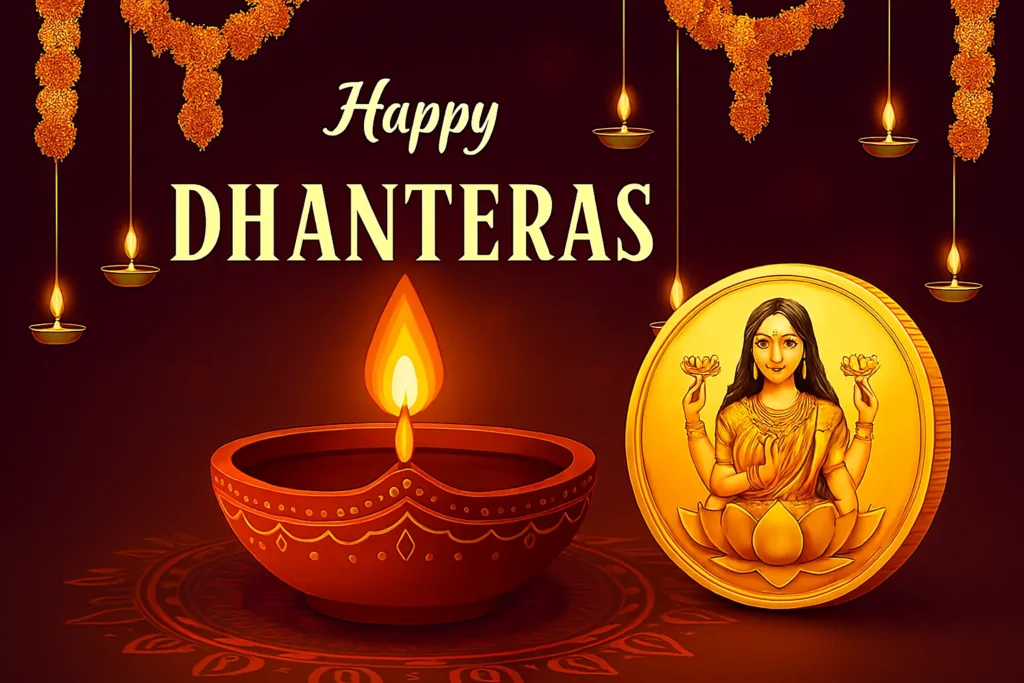
Why Do People Buy New Things on Dhanteras? Mythology & Beliefs
Introduction: Why Do People Buy New Things on Dhanteras?
Every year, as Diwali approaches, homes across India sparkle with lights, joy, and new purchases. From gold coins to kitchen utensils, people eagerly buy something new on Dhanteras, but have you ever wondered why?
This ancient tradition is not just about shopping. It’s rooted in Hindu mythology, astrology, and the belief in attracting wealth and divine blessings into one’s home.
What Is Dhanteras and When Is It Celebrated?
Dhanteras marks the first day of the five-day Diwali festival. The word ‘Dhan’ means wealth and ‘Teras’ means the thirteenth day of the lunar fortnight. It falls on the thirteenth day of Krishna Paksha in Kartik (October–November).
In 2025, Dhanteras is on 18th October 2025. Auspicious timings for Delhi are between 7:17 PM to 9:13 PM. Exact mahurat city-wise can be checked from the Panchang.
People worship Lord Dhanvantari, Goddess Lakshmi, and Lord Kubera for prosperity and good health. The day symbolizes new beginnings, abundance, and light entering life after darkness.
Mythology Behind Dhanteras
1. The Emergence of Lord Dhanvantari
Lord Dhanvantari, the God of Ayurveda, emerged from the cosmic ocean during Samudra Manthan carrying a pot of Amrit. His arrival symbolizes health, longevity, and prosperity.
2. Lord Kubera – The God of Wealth
Lord Kubera, treasurer of the gods, is worshipped for rightful prosperity. He received a boon from Lord Shiva to manage and distribute wealth among beings.
3. The Tale of King Hima’s Son
Prince Hima’s wife kept him safe from a predicted snakebite by surrounding him with lights and wealth. This led to the tradition of lighting diyas and buying new items to ward off evil.
Beliefs Behind Buying New Things on Dhanteras
- Symbol of Wealth and Prosperity: Buying gold, silver, and utensils invites Goddess Lakshmi’s blessings.
- Spiritual Cleansing: Cleaning and decorating homes symbolizes readiness to receive prosperity.
- Auspicious Energy: Planetary alignments favor new beginnings and wealth multiplication.
- Honoring Divine Energies: Worship of Lakshmi and Kubera invites abundance and moral purity.
What Do People Traditionally Buy on Dhanteras?
The whole day is auspicious except Rahukaal (9:00 AM to 10:40 AM). Popular purchases include:
- Gold and Silver: Symbols of purity and financial stability.
- Utensils: Represent nourishment and prosperity.
- Electronics and Vehicles: Signify progress and fortune.
- Broom (Jhaadu): Believed to sweep away poverty and negativity.
- New Clothes and Decor: Mark the beginning of a joyful festive season.
How to Do Dhanteras Puja at Home
- Clean your home and decorate with rangoli and flowers.
- Gather puja items: Gangajal, Kesar-Chandan, flowers, dhoop, deep, naivedya, ornaments, incense, Kapoor, khada dhaniya, sugar.
- Light at least 13 diyas in the evening, including two at the main door.
- Place idols or pictures of Lakshmi, Ganesha, Kubera, and Dhanvantari on a clean altar.
- Offer sweets, flowers, incense, and newly purchased items.
- Chant Lakshmi mantras for abundance.
- Keep new purchases near the altar for blessings.
Spiritual Meaning of Lighting Diyas on Dhanteras
Lighting diyas on Dhanteras carries profound spiritual and cosmic meaning. This act is not just symbolic—it is believed to open energetic channels that invite health, wealth, and divine blessings into the home. The flickering flame represents the eternal light of the soul, dispelling ignorance and darkness while invoking divine grace.
On this sacred day, people light diyas at sunset to honor Goddess Lakshmi, Lord Dhanvantari, and Lord Yama, seeking their protection and prosperity for the year ahead.
Why 13 Diyas Are Lit
According to tradition, 13 diyas are lit on Dhanteras evening. Twelve are placed in different corners of the house to guard all directions, symbolizing wholeness and balance in life. The thirteenth diya, known as the Yam Deep, is placed outside the main entrance or near the tulsi plant to honor Lord Yama, the God of Death. Lighting this lamp is believed to ward off untimely death, misfortune, and negative planetary influences.
The Skanda Purana mentions that lighting diyas on Dhanteras ensures divine protection for the household throughout the year, keeping the family free from fear and darkness.
Symbolism of the Diya
- Each diya represents one of the five elements of nature: earth, water, fire, air, and space.
- Ghee or sesame oil is considered auspicious for attracting positive energy and abundance.
- Steady flames are believed to welcome Goddess Lakshmi into the home.
Timing and Devotion
Lighting diyas during the Pradosh Kaal (around 6:30 p.m. to 8:00 p.m.) is considered the most auspicious time. It is believed that Goddess Lakshmi begins her journey to bless homes during this period. Keeping the lights glowing throughout the night pleases her and ensures prosperity and protection.
Spiritually, the diya reminds us that no matter how dark life gets, our inner flame must keep shining. Just as oil sustains the lamp, faith and devotion sustain our soul.
Why Are Coriander Seeds and Sugar Used in Dhanteras Puja?
During Dhanteras Puja, devotees offer coriander seeds (dhaniya) and sugar (shakkar) to Goddess Lakshmi. Though simple kitchen ingredients, they carry deep symbolic and astrological meaning.
1. Symbol of Prosperity and Good Harvest
In ancient India, coriander seeds were considered a mark of abundance and good harvest. Offering them to Goddess Lakshmi signifies financial growth and purity in wealth.
2. Representation of Sweetness and Harmony
Sugar symbolizes the sweetness of life, relationships, and speech. It ensures that prosperity is accompanied by peace and happiness.
3. Astrological and Energetic Significance
Coriander seeds correspond to Mercury (Budh), the planet of intellect and trade, while sugar resonates with Venus (Shukra), the planet of luxury and prosperity. Offering both balances these energies for financial wisdom and abundance.
4. The Traditional Ritual
After the puja, devotees prepare a mixture of coriander seeds and sugar and keep it in the puja room or safe. The next morning, it is distributed among family members or mixed into household grains as a blessing from Lakshmi.
5. Symbolic Message
Together, coriander and sugar remind us that wealth should grow like seeds and spread sweetness. It’s about balanced prosperity—where health, love, and happiness bloom alongside material success.
More Astrological Significance of Dhanteras
Astrologers believe that Venus (Shukra) governs wealth and luxury. On Dhanteras, Venus energy aligns harmoniously with other planetary forces, creating a muhurta for success and material gain. That’s why investments, new ventures, or business launches on Dhanteras are believed to bring long-term prosperity.
Modern Interpretation: Dhanteras in Today’s Times
While the ancient roots of Dhanteras are mythological, its modern relevance lies in the psychology of optimism. Buying something new, decorating the home, and performing puja create positive vibrations and gratitude—essential for manifesting abundance.
This blend of faith, culture, and positivity keeps Dhanteras one of the most celebrated festivals in India, uniting families and igniting hope for a better year ahead.
Conclusion: The Deeper Meaning of Buying New Things on Dhanteras
So, why do people buy new things on Dhanteras? It’s not just about material gain—it’s about inviting positive energy, showing gratitude, and aligning with divine prosperity. From the story of Lord Dhanvantari to the light of diyas that protect homes from negativity, Dhanteras celebrates the eternal belief that new beginnings bring new blessings.
As you buy something new this Dhanteras, remember—it’s not the item that brings luck, but the intention, faith, and devotion behind your act.
What do you usually buy on Dhanteras—gold, silver, or something unique?
Share your tradition or favorite Dhanteras memory in the comments below.
FAQ: Common Questions About Dhanteras
Q1: Why do people buy gold and silver on Dhanteras?
Buying gold or silver symbolizes inviting Goddess Lakshmi’s blessings and ensuring long-term prosperity.
Q2: Is it okay to buy electronics or vehicles on Dhanteras?
Yes. Any new purchase made on Dhanteras is believed to bring good fortune, provided it’s done with positive intent.
Q3: Which God is worshipped on Dhanteras?
Lord Dhanvantari, Goddess Lakshmi, and Lord Kubera are worshipped for health, wealth, and abundance.
Q4: What should we not buy on Dhanteras?
Avoid buying items made of black metal, glass, or iron as they are considered inauspicious on this day.
Q5: How is Dhanteras connected to Diwali?
Dhanteras marks the beginning of the Diwali festival, setting the tone for worship, wealth, and light overcoming darkness.
Explore More from Forge Your Best Self
- Morning Rituals & Manifestation
- Ahoi Ashtami 2025 – Ammaji’s Courtyard
- Ravan Worship in India
- Kartik Month – Significance in Hinduism
- Sharad Purnima 2025
- When Festivals Bring More Stress Than Joy
- Why Card Parties Are the Heart of Diwali
- Karva Chauth 2025
- Hindu Festivals in October 2025
- Ram vs Ravan – Leadership & Dharma Lessons
- Shurpanakha in the Ramayana
- A Kitchen Filled with Diwali Magic
- Morning Rituals & Manifestation
- Ahoi Ashtami 2025 – Ammaji’s Courtyard
- Ravan Worship in India
- Kartik Month – Significance in Hinduism
- Sharad Purnima 2025
- When Festivals Bring More Stress Than Joy
- Why Card Parties Are the Heart of Diwali
- Karva Chauth 2025
- Hindu Festivals in October 2025
- Ram vs Ravan – Leadership & Dharma Lessons
- Shurpanakha in the Ramayana