
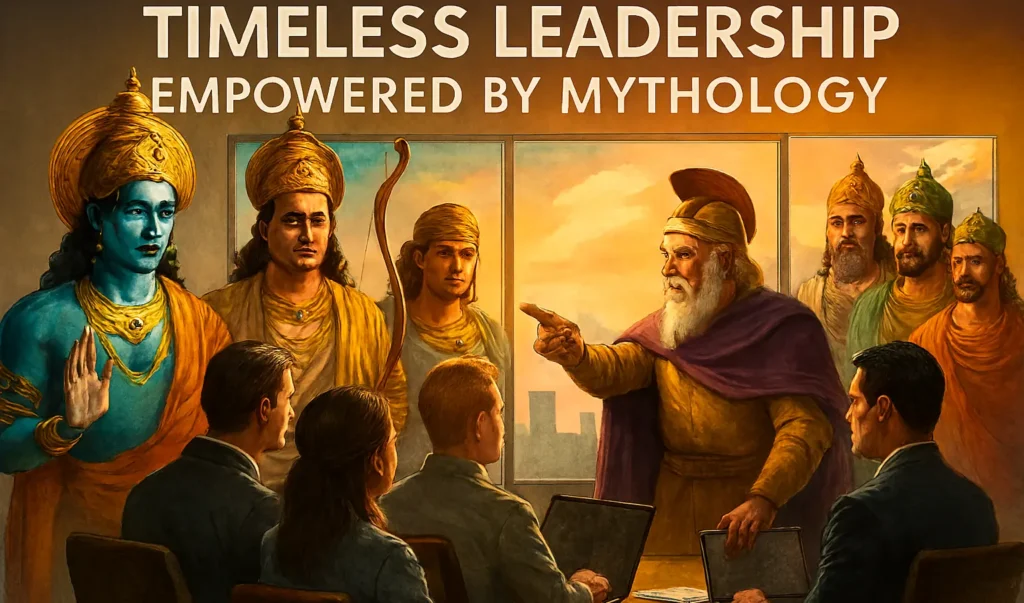
Mythology in Management and Leadership: Timeless Lessons for Modern Workplaces
Published: October 21, 2025 | Author: Forge Your Best Self
Introduction
In every corporate corridor, managers face dilemmas: how to lead diverse teams, balance profit with ethics, and inspire performance under pressure. While business schools offer models, mythology offers stories that explain leadership and resilience in ways theories cannot.
Mythology in management is not about blindly following ancient tales. It’s about extracting lessons and applying them to modern workplaces. This blog explores how mythology connects with corporate examples and guides management graduates into better leaders.
Mythology as a Management Framework
Mythology is coded wisdom. Each story symbolizes human struggles: doubt, ego, conflict, loyalty, ambition. Leaders today face the same dilemmas that mythological heroes faced.
- Arjuna’s confusion mirrors a manager torn between loyalty and duty.
- Rama’s leadership shows how integrity earns respect.
- Odysseus’ adaptability teaches crisis survival.
- The Pandavas’ teamwork highlights diversity’s strength.
Case Studies: Mythology Meets Management
1. The Bhagavad Gita and Ethical Decision Making
Krishna guided Arjuna through confusion, helping him focus on duty without fear.
Corporate Parallel: Ratan Tata chose purpose over attachment with the Tata Nano project.Lesson: Leaders must balance emotion and duty. Decisions should align with long-term organizational dharma.
2. Rama’s Leadership and Trust Building
Rama united allies through fairness and respect.
Corporate Parallel: Satya Nadella reshaped Microsoft’s culture through empathy and collaboration.Lesson: Trust builds long-term success beyond short-term results.
3. Mahabharata and Team Dynamics
The Pandavas succeeded through diverse strengths and loyalty.
Corporate Parallel: Google’s cross-functional teams reflect this principle.Lesson: Balanced teams with complementary skills outperform homogeneous ones.
4. Odysseus and Strategic Adaptability
Odysseus survived trials through wit and resilience.
Corporate Parallel: Elon Musk’s SpaceX journey mirrors Odysseus’ adaptability.Lesson: Adaptability is the foundation of survival and growth.
Applying Mythology to Career Growth
- Clarity in Confusion: Like Arjuna, seek mentors and align with purpose.
- Balancing Values with Ambition: Like Rama, uphold integrity.
- Resilience in Failure: Like the Pandavas, treat setbacks as preparation.
- Adaptability in Change: Like Odysseus, embrace innovation.
Daily Implementation: Turning Wisdom into Practice
- Decision Making: Detach from fear and focus on dharma.
- Team Meetings: Align with higher purpose.
- Hiring: Recruit diverse, loyal characters.
- Leadership Style: Balance authority with empathy.
Step-by-Step Exercises for Managers and Teams
| Exercise | Focus | Steps |
|---|---|---|
| Arjuna Exercise | Decision-Making | List dilemmas, emotions vs. purpose, ask “What would Krishna advise?” |
| Rama Exercise | Trust Building | Define team values, share openly, act weekly, track morale |
| Pandava Exercise | Hiring & Team Building | Map skill gaps, assign myth roles, match candidates |
| Odysseus Exercise | Adaptability | List setbacks, reflect, choose skill, apply consciously |
Benefits of Mythology in Management and Leadership
- Balanced Decisions: Combining logic with ethics.
- Visionary Leadership: Inspired by higher purpose.
- Stronger Teams: Built on complementary skills.
- Steady Career Growth: Through resilience and discipline.
- Better Culture: Based on trust, inclusiveness, and empathy.
Conclusion
The corporate world may look different from ancient kingdoms, but the core challenges remain: decision making, leadership, conflict resolution, and team success. Mythology bridges past and present by offering timeless principles for modern workplaces.
From Krishna’s clarity in the Gita to Rama’s trust-building leadership and Odysseus’ adaptability, mythology provides case studies as relevant as today’s boardroom strategies. By practicing step-by-step exercises inspired by mythology, managers can transform not just their leadership but their entire workplace.
For management graduates, mythology offers a foundation for steady career growth. For corporate leaders, it provides a moral compass and practical wisdom. For teams, it brings unity, diversity, and strength.
Mythology is not just about gods or legends. It is a manual for human behavior and leadership. By bringing its lessons into management, today’s professionals can achieve not just targets but sustainable, value-driven success.
Frequently Asked Questions
Q1. Why is mythology relevant in corporate management today?
It provides lessons in decision making, leadership, and teamwork that go beyond technical models, focusing on values and human psychology.
Q2. Can mythology really guide modern leaders?
Yes. Leaders like Satya Nadella and Ratan Tata mirror mythological leadership styles of empathy, trust, and clarity.
Q3. How can mythology improve hiring?
Mythology shows the power of complementary skills. Leaders can recruit for diversity, loyalty, and adaptability rather than just technical ability.
Q4. Is mythology useful only in Indian workplaces?
No. Greek, Roman, Norse, and Indian mythologies all offer universally applicable leadership insights.
Q5. What is the biggest benefit of mythology in management and leadership?
The biggest benefit is holistic growth, leaders who balance ethics with ambition, and organizations that succeed steadily with integrity.